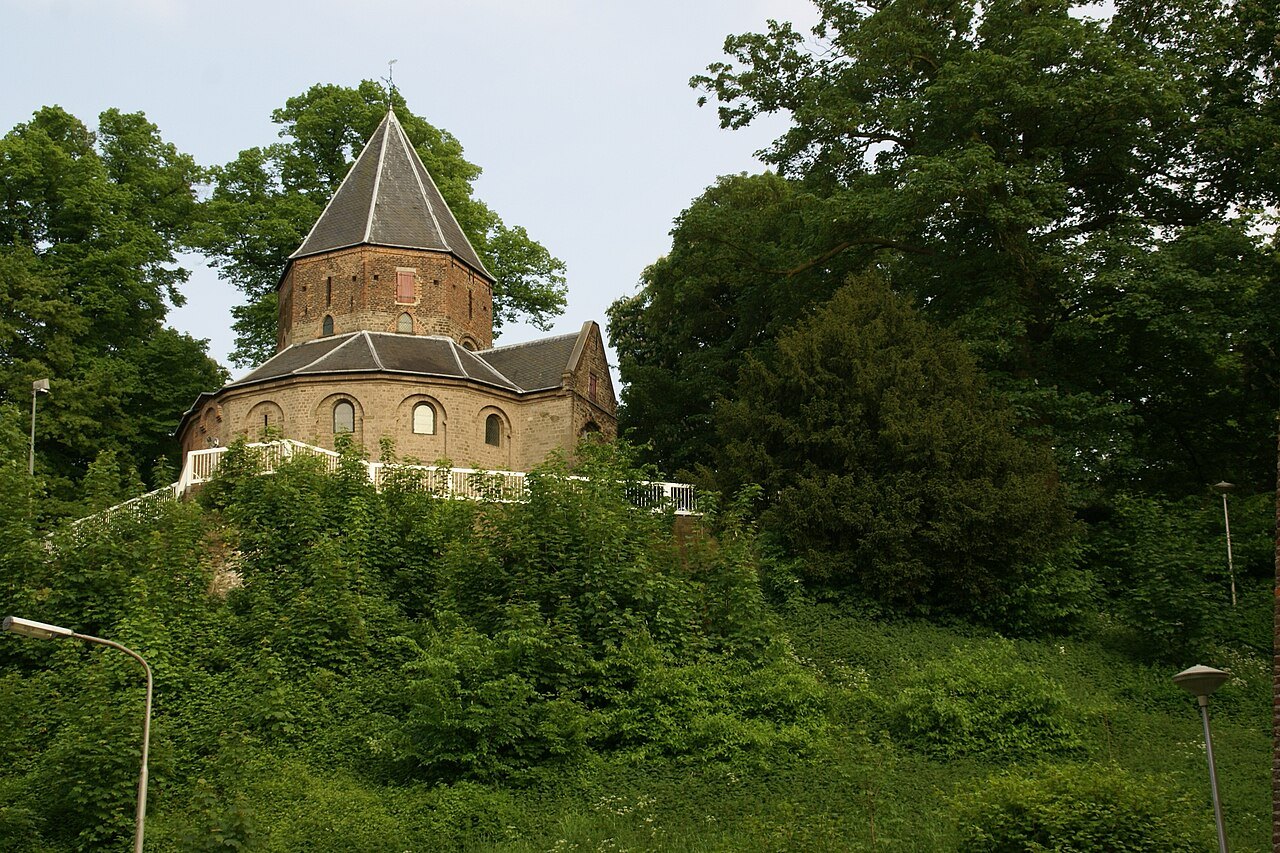
At the Valkhof in Nijmegen, historical traces stand in a park that also offers views and urban open space. Regional tourism information identifies the Nicolaaskapel and Barbarossa ruins as prominent features. Imagining a fully preserved castle complex would mean seeing more than actually survives. Begin with the visible remains and their position before using historical interpretation to understand missing relationships.
Question the ruins instead of completing them
First consider a surviving wall or arch as evidence in its own right. Which shape can you recognise, where does the fabric end, and what does vegetation conceal? A historical reconstruction drawing may help later, but it remains an interpretation. Keep the form visible today separate from an image of an earlier complex.
The chapel and the ruin do not require identical approaches. With an enclosed building, compare its outer form; with a fragment, notice the relationship between surviving and missing space. Interior access has its own arrangements. A park you can enter does not promise that every building within it is open too.
The view explains part of the setting
Then look across the surroundings. How does the elevated position change the relationship with the town and river landscape? Pick one fixed landmark and compare the view from a second permitted position. A few steps can demonstrate how strongly framing affects perception.
For photographs, remain on designated paths and behind existing boundaries. A ruin edge or slope is not an additional viewing platform. In wet weather, a short circuit may be more appropriate than seeking every possible angle. Check for current works too: the municipality publishes information about maintenance and renewal of the park.
Do not confuse the park and museum
The name Valkhof also appears in connection with a museum. Before travelling, establish which destination you actually mean and treat museum hours separately from park access. For a manageable visit, compare two historical traces and take in a view of the town. Afterwards, note what remains unresolved: a building phase, former use or change in the surroundings. One clear question preserves the historical connection better than a sequence of similar, unlabelled photographs.