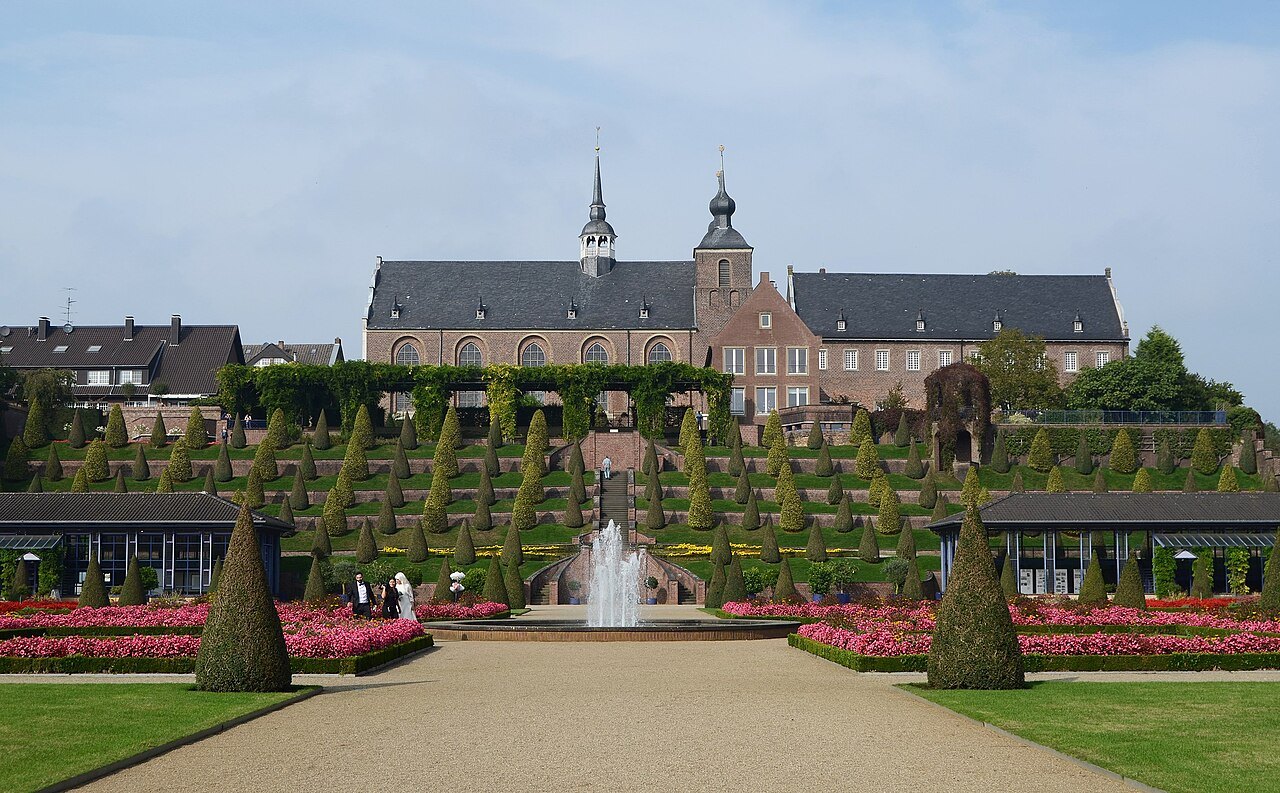

In a single picture, Kloster Kamp's terraced garden can resemble a symmetrical pattern. Moving through it changes that impression. Levels conceal and reveal parts of the grounds, paths direct the eye, and the building alternates between backdrop and point of reference. A rewarding visit therefore asks how the space is organised, rather than how many flowers happen to be blooming.
Begin below without assuming a climb
First examine how steps, beds and paths connect from a position you can comfortably reach. Which lines draw your eye uphill? Where do figures or water interrupt the arrangement? The official account describes a baroque composition of these elements. You do not need to name every detail to understand the overall effect.
If you intend to explore the terraces, consider the actual entrances and your return route. A garden with changes in level is not necessarily step-free merely because its paths look close together on a map. Ask about a suitable viewing option if mobility is a concern. Looking from a single level can still reveal how the garden's architecture works.
A historic idea in a living garden
According to the abbey's account, Abbot Franziskus Daniels commissioned an eighteenth-century baroque redesign involving the monk Benedictus Bücken. This helps you see the grounds as an intentional design. It does not mean that every visible plant or surface dates from that period. Gardens are maintained, replanted and restored.
Notice the distinction between the lasting framework and its changing appearance. A path alignment remains legible without flowers. Shadows, meanwhile, can emphasise a sequence of steps or make it look visually busy as the day progresses. For photographs, try an overall view followed by a close composition, perhaps a step edge with the bed above it. Compare which picture explains the arrangement of levels more clearly.
Organise abbey and garden visits separately
If you also want to enter a church, see an exhibition or attend an event, check its separate visitor information. Access to outdoor grounds says nothing about whether interior spaces are open. Avoid scheduling the garden so tightly before an appointment that every staircase becomes a shortcut. A quiet pause and a second look along an axis can reveal more than covering the whole site without attention. Keep passageways clear, especially where several visitors stop to photograph the same view.