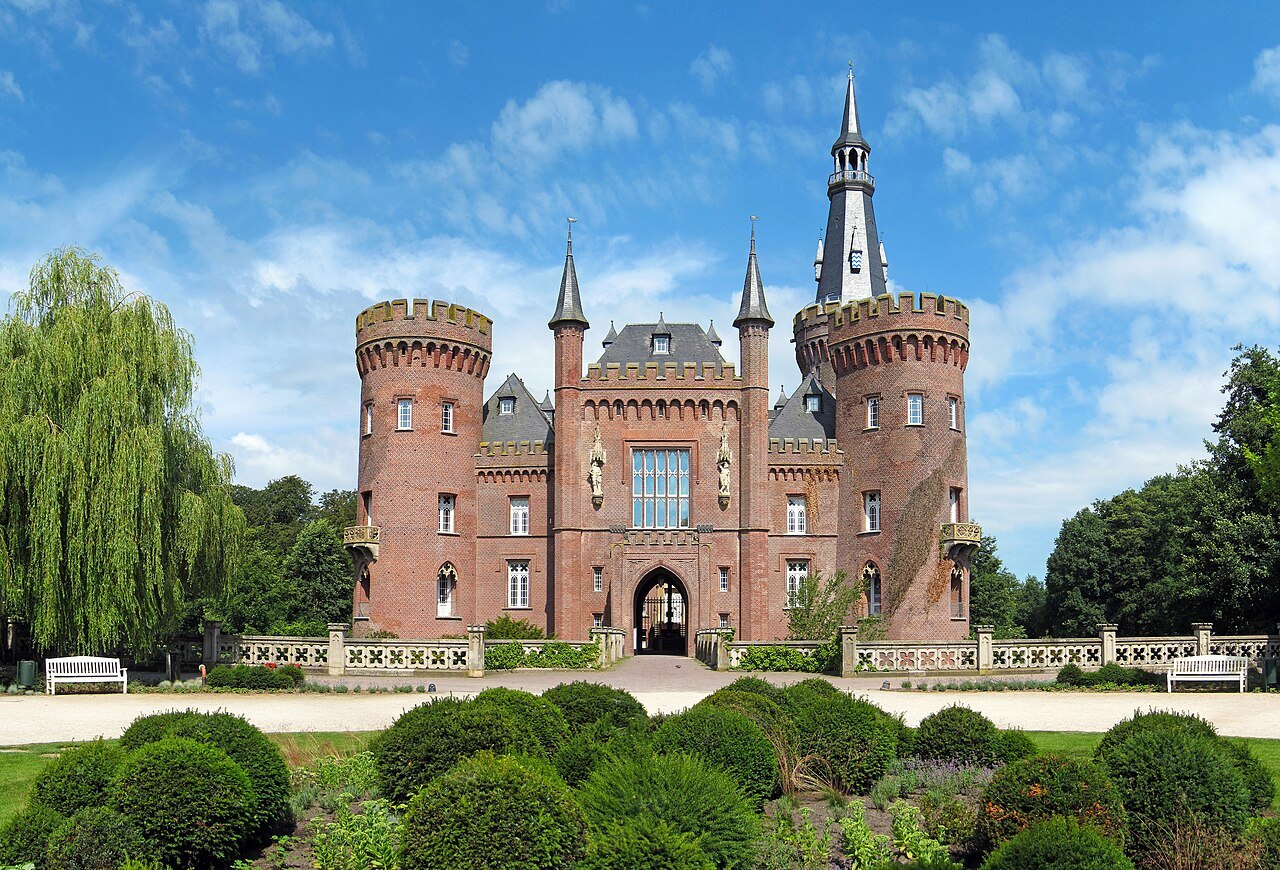
In photographs, Moyland's castle, water and greenery form a single scene. On the ground they invite quite different visits. Architecture rewards looking from a distance, a collection requires attention to individual works, and a park reveals itself as you move. Decide which of these interests matters most. An afternoon with art need not become a hurried attempt to cover every corner of the grounds.
What belongs within your ticket and your time?
Check the museum website for current visiting arrangements and exhibitions. The existence of a collection does not mean every work in it is displayed at once. If you are travelling to see a particular artist, look for the current presentation or ask the museum. An advertised events programme does not establish which rooms will be accessible during your visit.
Treat the indoor visit as a separate part of the day. You might choose one room, take in its overall arrangement and then compare two works. Which materials stand out, and how does distance or viewing direction change your response? These questions require no specialist background. Reading the label afterwards can extend or correct your initial impression.
The park is more than an approach to the entrance
The official park description identifies sculptures from the museum collection and a herb garden. Outdoors, then, you encounter both designed planting and art. Look at a sculpture in relation to its setting: do trees frame it, does it stand in open space, or does its outline change as you move? Keep to permitted paths and respect the distance required around artworks.
Explore a herb garden through leaf shapes, growth patterns and labels. Admission does not automatically include permission to touch, pick or taste plants. A visual task works well with children: find one plant with particularly narrow leaves and another with broad ones. There is no need to identify as many species as possible immediately.
A second look at the building
Before leaving, look back at the castle from an accessible position. Separate observation from interpretation: towers, window alignments and reflections are visible, but they do not reliably establish the age of a building element. Save a question for the historical account instead of guessing a date. If time is limited, deliberately make either the collection or the park your focus. The other remains a possible later visit rather than an obligation left unfinished.