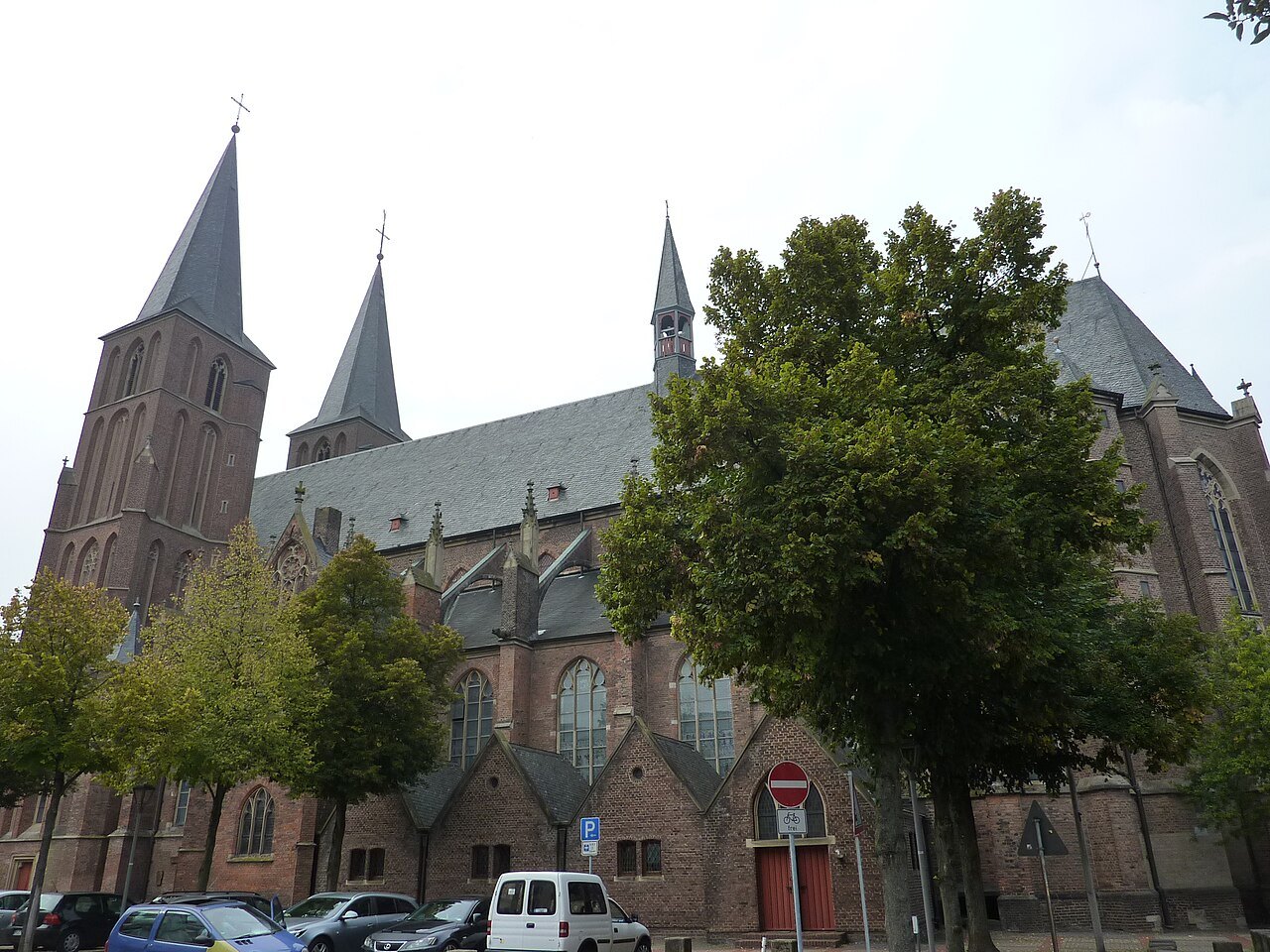

St. Mariä Himmelfahrt, Kleve's collegiate church, shapes the town through more than its size. Religious use, urban history and remembrance overlap here. Arriving from a town walk, you can notice a change in the way space directs your attention: outside, streets and façades organise the view; inside, pillars and vaults do the same. Plan your visit around the church's continuing religious life, giving any service taking place priority.
What the name tells you
Kleve's official account explains that the collegiate foundation at Monterberg moved to Kleve in 1341. The church subsequently built to replace the Johanniskirche was completed in 1426. The name “Stiftskirche” therefore records a historical connection, while the building now serves as a parish church. It does not imply that the same medieval community still occupies it.
Another turning point matters when looking at today's building. Reconstruction began in 1951 after extensive wartime destruction. Do not read the interior as an untouched medieval original. Choosing to rebuild a church is as much part of a town's history as its first construction. This perspective also helps distinguish the history of older furnishings from the later restoration of their surroundings.
Start with one detail
The tourism information draws attention to the substantial trachyte pillars. Follow one upwards with your eyes, then compare how the interior opens from the middle and from its edges. You do not need specialist architectural vocabulary. Ask instead what your current position hides and what becomes visible as you move slowly onwards.
The furnishings listed by the tourism office include the Marian altar in the high choir and the Cross altar in the right aisle. Choose one first and read the explanation provided. Notice figures, their directions of gaze and the arrangement of scenes before settling on an interpretation. Looking carefully at one work gives you more to remember than photographing every object in quick succession. Remain within the areas open to visitors and follow the church's photography notices.
Include the space outside
Ewald Mataré's war memorial stands on the north side, while a work by Bert Gerresheim on the forecourt commemorates Karl Leisner. These pieces give the surrounding space a purpose beyond simply passing through it. Read the names and inscriptions rather than assuming both monuments concern the same event.
The tourism page identifies step-free access to the church. If that is essential to your visit, still establish the relevant entrance and your approach to it. Before leaving, look back from a nearby lane. The large interior becomes a building among houses, paths and everyday encounters once again, making its place in the town easier to understand.