
Rindern is more rewarding when you do not search only for a single monument. This part of Kleve connects village life with the open lowlands and the setting of the Wasserburg. The Gesamtschule am Forstgarten describes its own location through these relationships with gardens, the zoo and Museum Kurhaus. Their apparent closeness on a map does not mean they form one short, continuously public walking circuit.
Separate the Wasserburg from assumptions about access
The town's garden-conservation study places Wasserburg Rindern within the historic network of the Neuer Tiergarten. It also describes subsequent building changes and its use as an educational institution. The building is therefore neither merely scenery nor automatically an open castle museum. For a visit inside, consult the institution's information and respect its working arrangements.
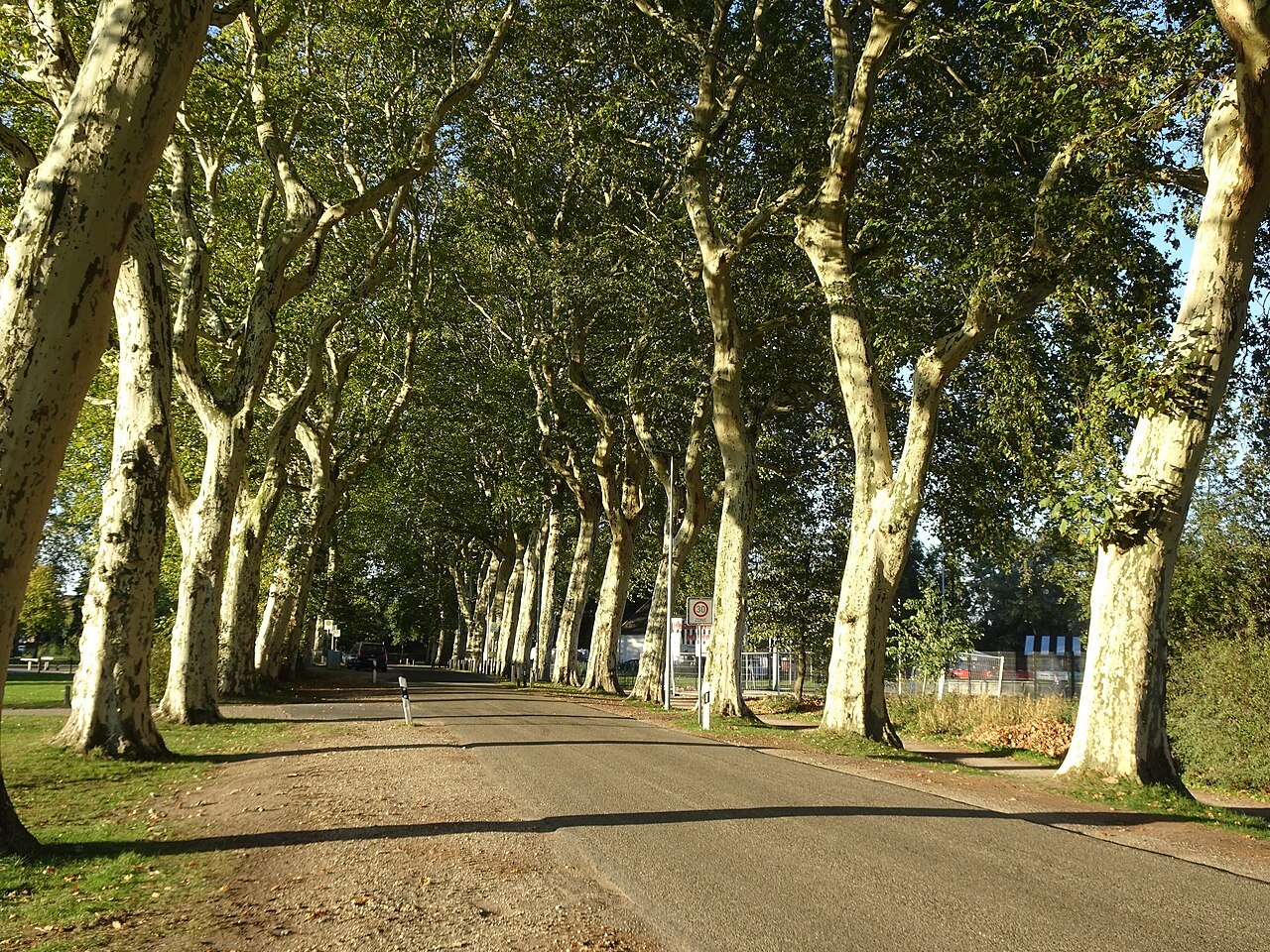
From accessible surroundings, look along a line or avenue of trees towards the ensemble. Ask whether the trees emphasise a direction or screen off an area. A present-day visual relationship need not remain unchanged from the historical one. Comparing an older plan with the current situation can reveal how routes, buildings and planting alter connections across a landscape.
Village and edge work at different scales
Choose a manageable section within the inhabited village for the first part of your walk. Notice street spaces, entrances and the transition from public paths to private front gardens. Near the edge, the scale changes: lines of trees, open ground and watercourses become reference points instead of individual façades. That change is already a subject for the outing without needing another paid attraction.
Before leaving the village area, establish how you will return. A field track that suggests a connection on a screen may be private, unsurfaced or unsuitable for your group on the ground. Keep to clearly usable routes. After rain, the surface matters more than the distance calculated on a map.
Do not confuse a short visit with a whole garden day
A village section and a deliberately observed exterior view of the Wasserburg are enough for a short stay. Adding the museum or zoo requires a different schedule. Opening and admission arrangements then become part of preparation, whereas looking at the village can work independently of them.
A useful final question is which lines hold the place together: a street, an avenue, a watercourse or a view towards a larger building. Thinking this way lets you understand Rindern as a spatial whole. Photograph houses and people considerately, and do not turn private approaches into supposed shortcuts.