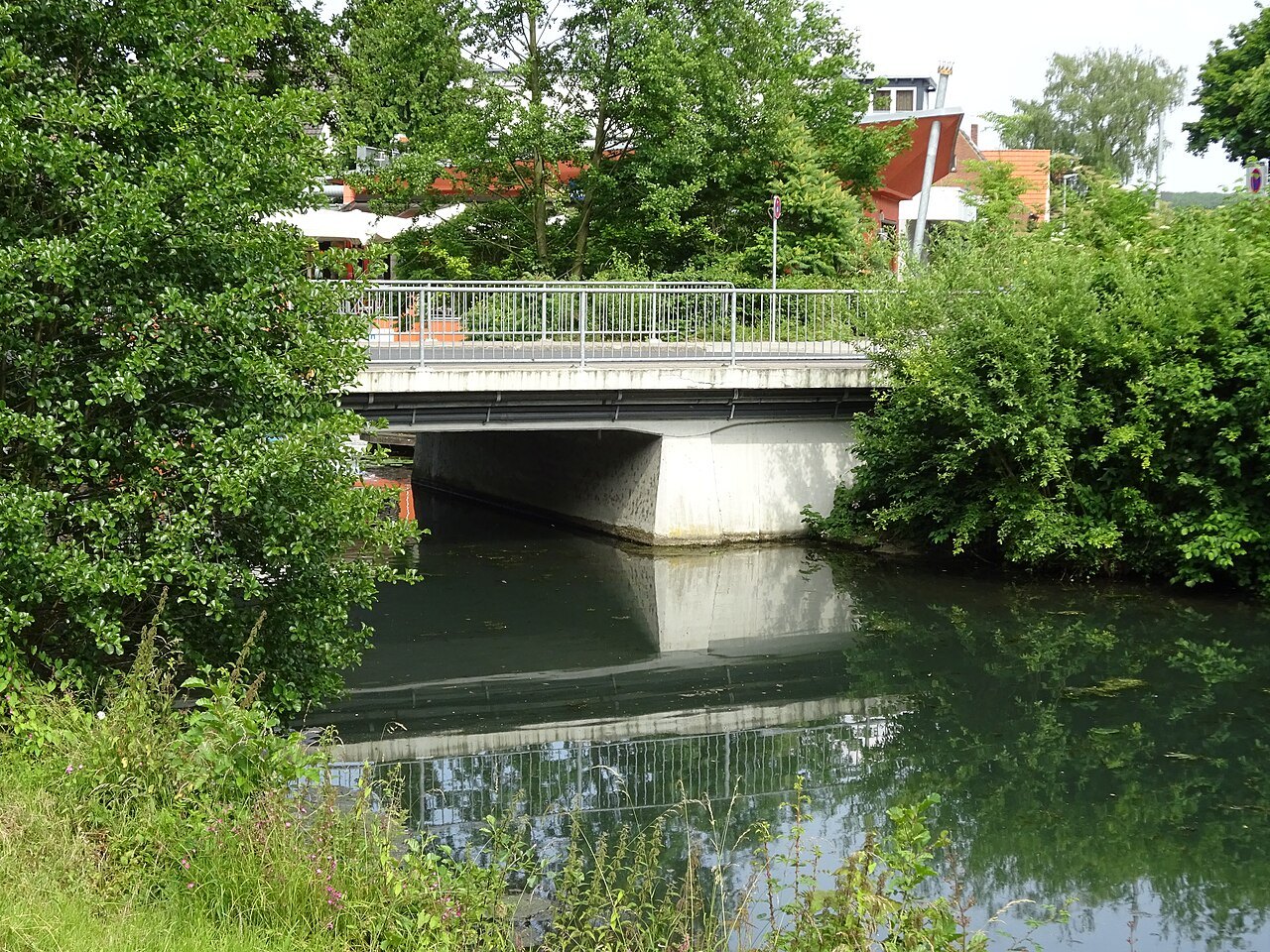

The Prinz-Moritz-Weg is more than a name for an arbitrary waterside walk. Kleve's tourism information describes it as connecting the gardens by Schwanenburg, along the Kermisdahl and Wetering, with the tomb of Johann Moritz von Nassau-Siegen. It therefore links town, designed landscape and remembrance. For planning, “connecting” is the important word: a named path is not automatically a circuit returning to where you started.
Choose your own extent first
Decide whether you want a section beside the Kermisdahl or the connection all the way to the tomb. Check the current map and mark the return as well. If arriving by public transport, include the stretches between your stops and the walk itself. Choosing a destination does not yet explain how the outing ends.
The official walking brochure also contains a longer Kermisdahl route. Do not confuse its complete itinerary with every individual section of the Prinz-Moritz-Weg. A published circuit can include junctions, climbs and additional destinations. Use the same route description throughout instead of accidentally combining pieces from several different walks.
Use water to understand the space
Beside the Kermisdahl, notice how the banks frame the town. Watch where Schwanenburg sits in the view and when trees or a bend conceal it. The water provides an intelligible line through the landscape, but that does not guarantee public access to every part of its banks. Follow the indicated route rather than simply following the direction of the water.
For a shorter outing, walking the same section out and back can be rewarding. On the return, the direction of view, the light and the relationship between foreground and town change. Choose a deliberate turnaround point before the group becomes tired. With children, this is more useful than repeatedly suggesting that the destination is “just ahead”.
Treat the tomb as a separate ending
If you continue to the Moritz tomb, allow the place a different pace from the walk. Read the explanation and consider it as a memorial rather than merely a reached waypoint. The official account mentions replicas of Roman altars and vessels; that should not be read as an untouched ancient burial site.
An additional viewpoint is an extension, not an obligation. Decide according to remaining time and energy. Precisely because this route connects different kinds of landscape, a clearly bounded visit can be more rewarding than a chain of spontaneous additions whose return journey is only considered at the end.