
The name Orange Route deserves a careful check. Kleve's tourism information distinguishes the extensive cross-border heritage route from the Orange cycle route linking Lingen, Apeldoorn, Kleve and Moers. For a Lower Rhine cycling day, this specific bicycle connection is the relevant reference. A search result for an Orange route elsewhere does not supply the correct map or stage distance.
Use history to select a stop
Kleve's official account identifies connections between Brandenburg and the House of Orange-Nassau, together with Johann Moritz of Nassau-Siegen's role as governor in Kleve. These relationships explain the town's inclusion. They do not turn every building in town into a directly Orange-related structure.
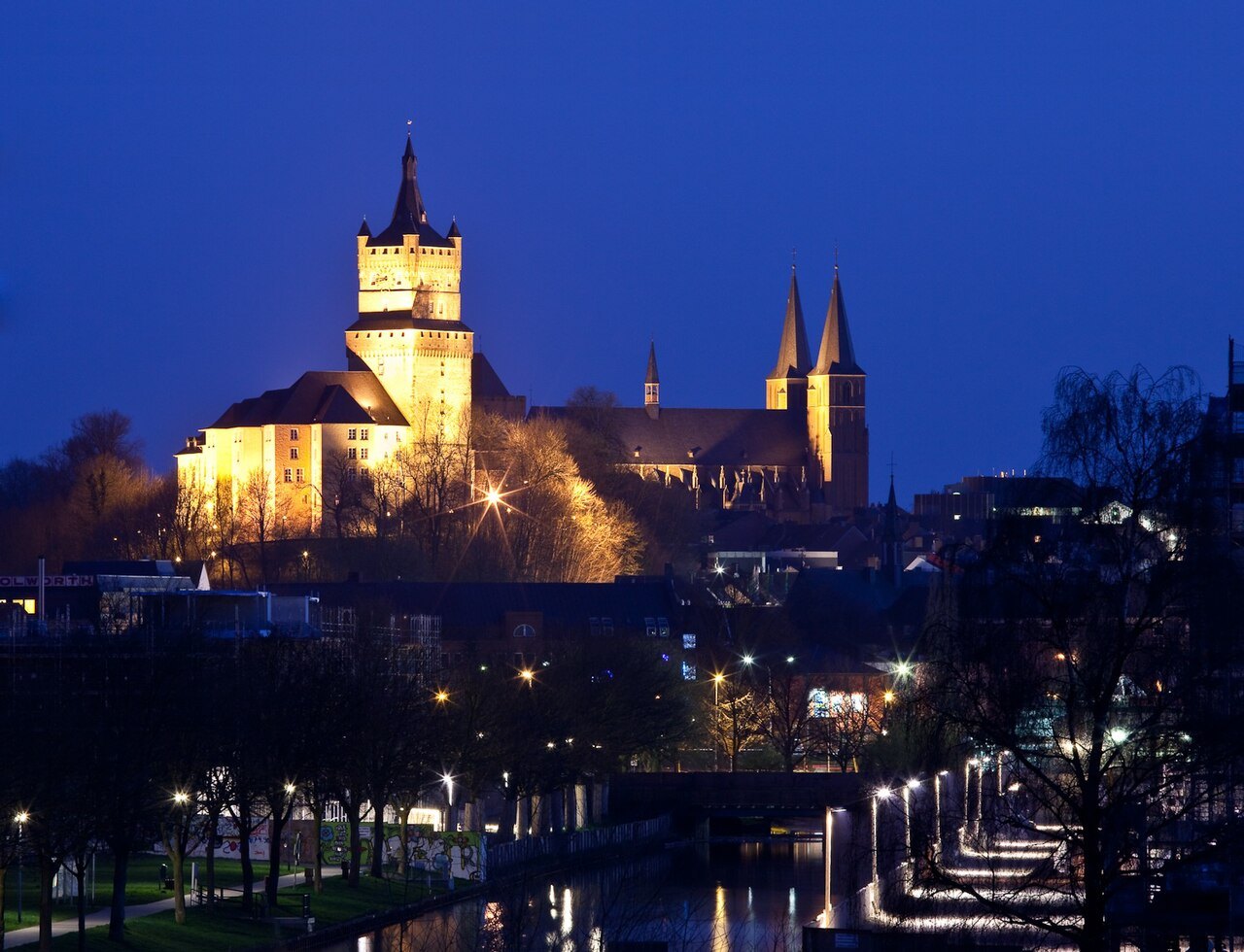
Schwanenburg or the baroque gardens can provide a historical stop if their individual history is read separately. Looking at an exterior and visiting an interior require different arrangements. For a cycling day, one clearly chosen place with time to understand it is often more useful than collecting several sights while passing through.
Find the correct regional section
The official Orange cycle route website lists Emmerich, Kleve, Bedburg-Hau, Kalkar and Xanten among the connected places. This provides a basis for choosing a regional section. The list is not a set of turn instructions, however: the actual ride needs a current map and checked approaches to the chosen stop.
When downloading information, establish which edition and section it covers. An overview of the whole heritage route can explain historical relationships while remaining too coarse for junctions or surfaces. Save a regional view with place names and important connections legible offline.
Do not hide visiting time inside riding time
Spending half an hour at a historical location and then stopping for coffee is a real interruption. Include it in the day's calculation. Use your personal cycling pace for movement and add the planned stops separately. An application estimating movement alone can otherwise substantially underestimate the whole outing.
With several people, agree on one main focus beforehand. One person may want historical detail while another prefers sustained riding. A shorter stage with one substantial visit can combine those interests better than a long route under constant time pressure. Treat further stops as optional extensions.
No need for historical completeness
You do not need to understand every connection with the House of Orange in one day. Record one question raised by the selected stop and investigate it afterwards. A cycling route offers an introduction to the subject rather than a complete history course.
Before returning, check the connection to the starting point and any crossings. A historical narrative does not make a closed ferry or unsuitable road usable. If shortening becomes necessary, the theme should not override the practical plan. A manageable section that has genuinely been explored remains a complete outing and provides a clear connection for another stage later. Keep the route's full name with your notes so that future research does not accidentally switch to a similarly named route in another region.