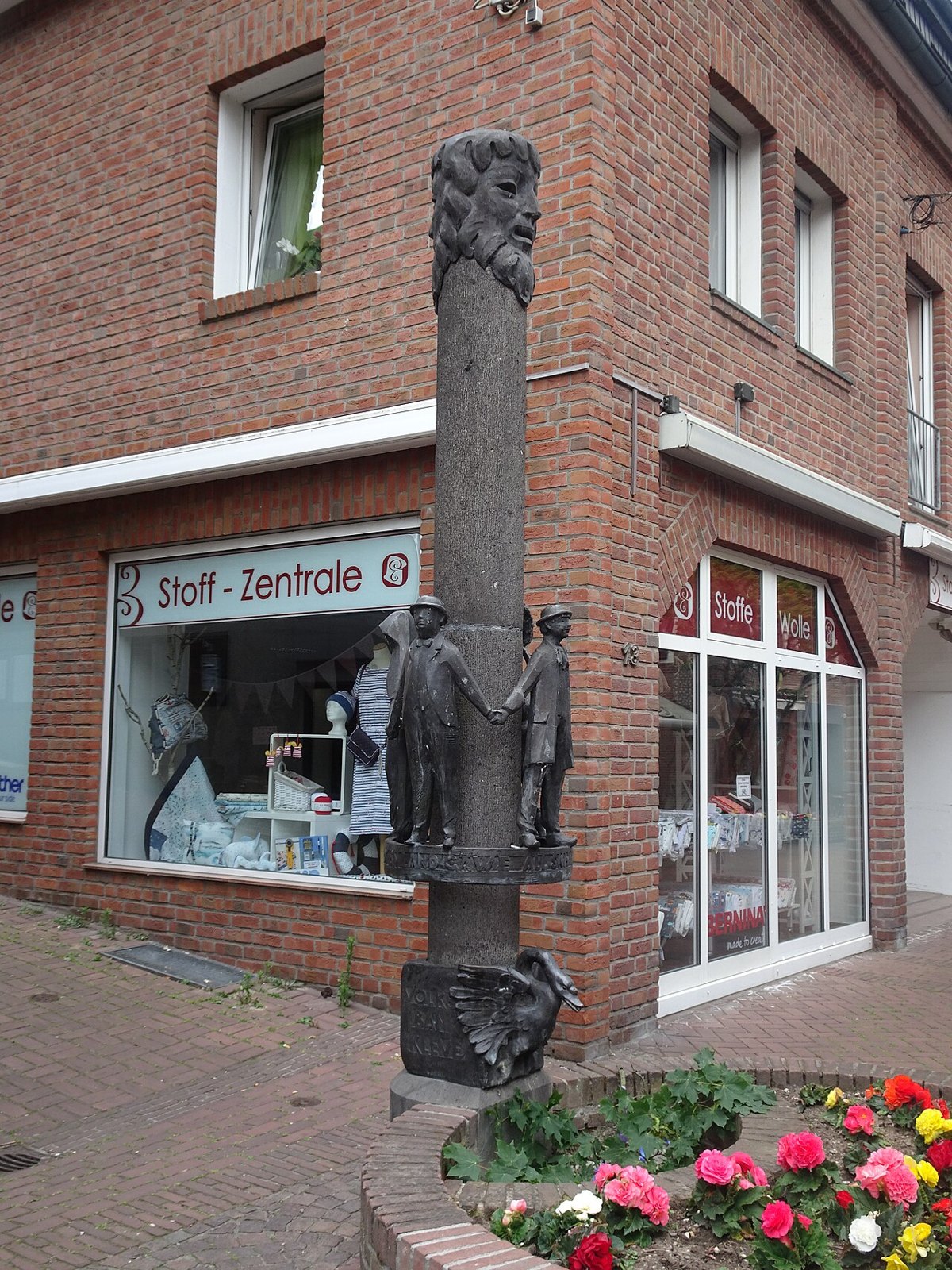

Janusbrunnen on Kavarinerstraße is a small stop that raises a larger question: when is an object in a town a work of art, when is it street furniture, and when is it both? Kleve's municipal listing explicitly describes it as an artwork incorporating a drinking-water fountain. This distinguishes it from a purely decorative basin. You can therefore approach it through its use as well as its form.
Do more than glance while passing
Begin with its position in the street. From which direction do you notice it first? Can it be viewed from several sides, and how do people move around it? A sculpture in a museum often has a deliberately clear viewing area. In a shopping street, it shares space with routes, displays and people heading somewhere else entirely.
Stand a little to the side at first. Distinguish the overall outline from individual figures and details. A close-up may describe one feature well while losing the connection with the street. If taking photographs, start with a wider view and then move to a detail. This will help you remember why the work stands out in this particular position.
Use belongs to the design
The municipal classification as a drinking fountain identifies a specific function. It does not guarantee water at every season or on every day. Observe its current condition and any local notices. Keep the outlet clean, use only the intended facility and do not make it your sole planned water source for a longer outing.
The combination of art and utility is interesting to watch. Must someone come closer to discover the function? Does a person taking water change the impression of the ensemble? Questions like these reveal how actions contribute to the meaning of public art, alongside any written explanation.
Compare different town fountains
If you later see the Elsa fountain, consider the difference between its narrative group of figures and Janusbrunnen's role in everyday infrastructure. Comparison is not a competition to choose a winner. It is a way of noticing different purposes within the same town centre.
A short stop is enough if you leave with one observation of your own, perhaps how the impression changes as you move around or how location relates to use. Keep passageways clear and respect other people's privacy when photographing. Precisely because no museum entrance announces the encounter, this kind of attention helps make art in everyday life visible.