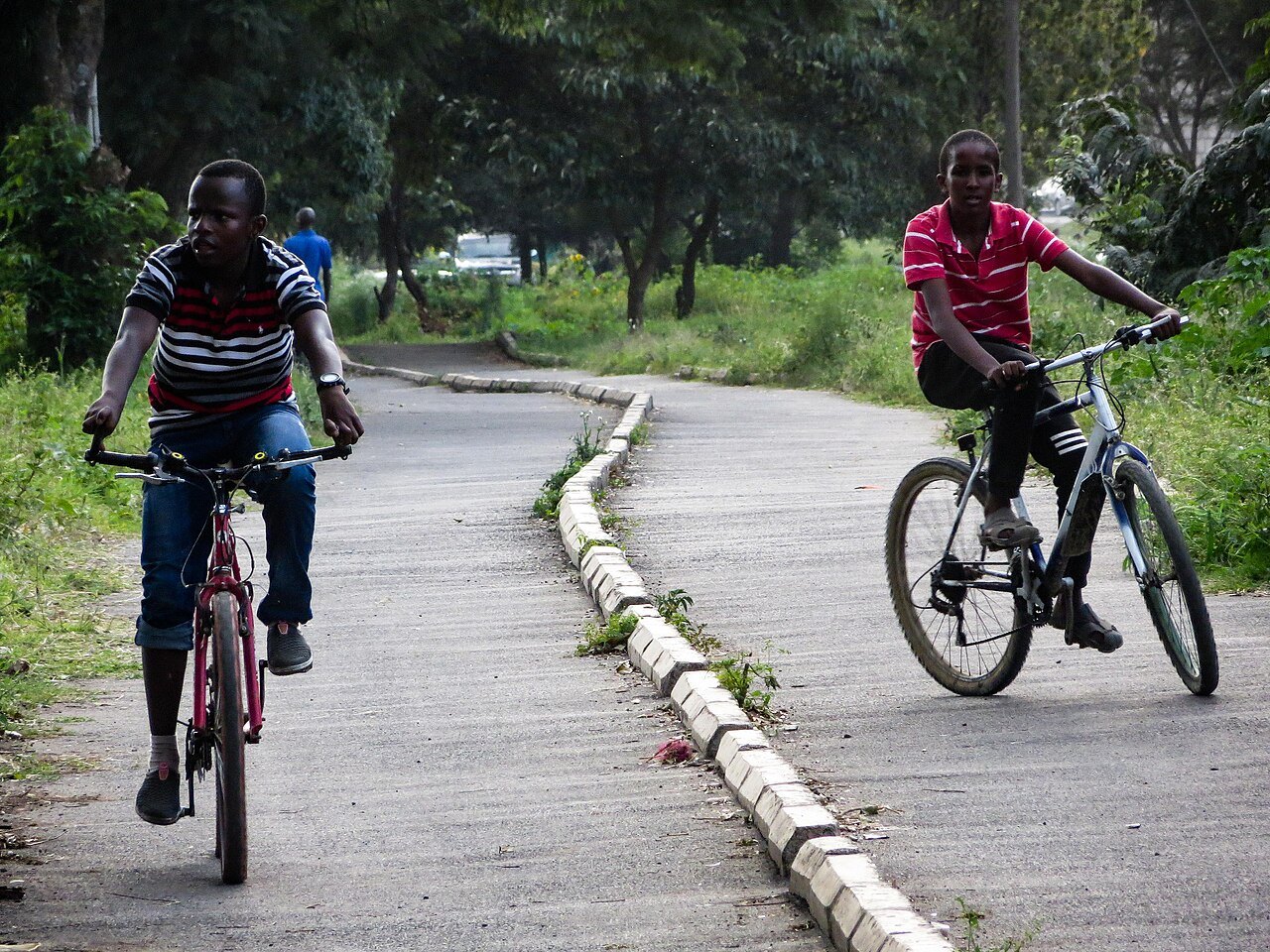

A child's riding distance cannot be inferred from age alone. A familiar level route without difficult crossings differs from the same distance with traffic, wind and loose ground. Planning a Lower Rhine family ride should therefore begin with observed abilities. The maximum possible distance is not a useful target if concentration for the return has already disappeared.
Observe riding before choosing the route
In a suitable traffic-free area, check starting, controlled braking and holding a steady line. Can the child glance behind without swerving substantially? Can they respond to an agreed stopping signal? These abilities tell you more about a planned crossing than whether ten kilometres have previously been completed.
Adapt the route to the weakest relevant skill. A child with good endurance but uncertainty around narrow bollards needs wide, clear connections. Someone with limited stamina needs short sections and an early return option. A trailer or cargo bicycle also changes width, turning space and the adult's workload.
One destination and two ways to shorten
Choose an achievable main stop, such as a confirmed playground or suitable picnic place. Add an early shortcut and an even shorter option. These alternatives should be visible on the same map rather than invented only when someone becomes tired. A train or bus is an exit option only when carriage of the actual bicycles and trailers has been established.
The ADFC recommends low-traffic routes, suitable surfaces and regular breaks. Make this concrete: put the break before the demanding return, not only afterwards. Keep drinking water and a snack accessible without unpacking everything. A closed café should not remove the only food option.
Keep agreements brief and clear
Before starting, agree on a few rules: where to stop, how to request a break, and who rides ahead of and behind the group. Regroup before unclear situations. A child should not feel obliged to follow an adult through a crossing merely to avoid being left behind.
Avoid constant shouted instructions over a long distance. Stop safely and explain the next specific situation instead. If a task appears too difficult, push or change the connection. This is an ordinary adjustment, not a reason to pressure the child through comparisons with others.
Tiredness is more than reduced speed
Distracted steering, unusually frequent stops or growing irritability can indicate that the outing is already long enough. Do not wait for complete exhaustion. A short pause may show whether hunger or thirst contributed, but it does not create an obligation to finish the whole planned loop afterwards.
After the ride, ask which section felt pleasant and which was difficult. Record specific features such as gravel, traffic or a headwind. The next outing can build on these observations. Finishing comfortably with some energy left makes regular shared rides more likely than a one-off distance record. It also allows the family to develop route choices from actual experience rather than relying on a generic label describing a ride as suitable for children.