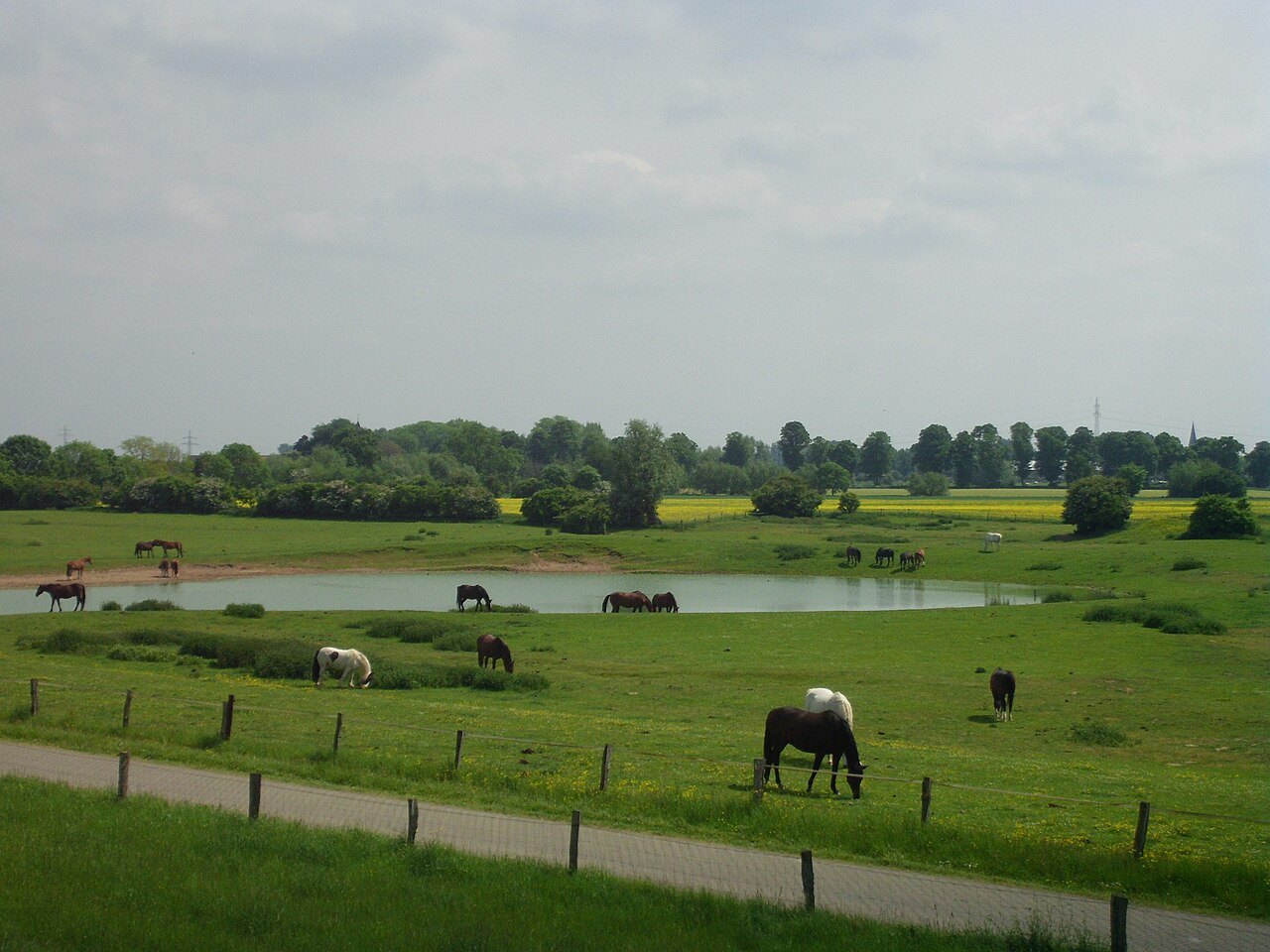

Düffelward suits an outing in which a small village and its surroundings matter equally. Kleve's municipal information places the district directly beside an old Rhine arm. That relationship is more useful than searching for a long list of attractions: village streets, open ground and water belong to one landscape. A deliberately limited walk can already reveal their differences.
Start within the village
The local community-house concept locates the parish church approximately in the middle of the older village centre. It can serve as a reference point without requiring a visit inside. First notice how streets approach it and how older building patterns differ from later residential areas. The concept identifies Mauritiussiedlung and Binnenfeld among those later developments.
These references are not an invitation to treat residential streets as an open-air museum. Keep to public routes and consider everyday life around you. A village with active associations and communal spaces is more than a backdrop for a brief photograph.
Pause where the landscape opens
Next choose a publicly accessible position with a view towards the surroundings. Notice horizontal lines: bank, dyke, trees and rooftops often occupy different layers. Binoculars can help you examine distant details without approaching across meadows or protected areas. You do not need to identify every bird accurately to notice differences in movement and the places animals use.
Compare the same view after a small change in position. A tree may suddenly hide the church tower, or water may only become visible from another angle. This builds an understanding of the ground that a single panoramic photograph cannot provide. Record one such concrete observation rather than a general judgement about how “wide open” everything feels.
Plan the return separately from further connections
The landscape opposite can sometimes seem almost within reach. That does not establish a direct walking connection. If you want to include a ferry to Schenkenschanz, explicitly check its current operation. Older village descriptions may record former transport links and should not be read as present-day timetables.
Arrange water, breaks and the journey home rather than expecting a catering business in a small village to be open whenever you arrive. In wind, an exposed landscape section may feel very different from the sheltered centre. Turning back sooner does not make the outing incomplete. You will still have experienced the key transition between settlement and river landscape and can return to the same observation point in different conditions.