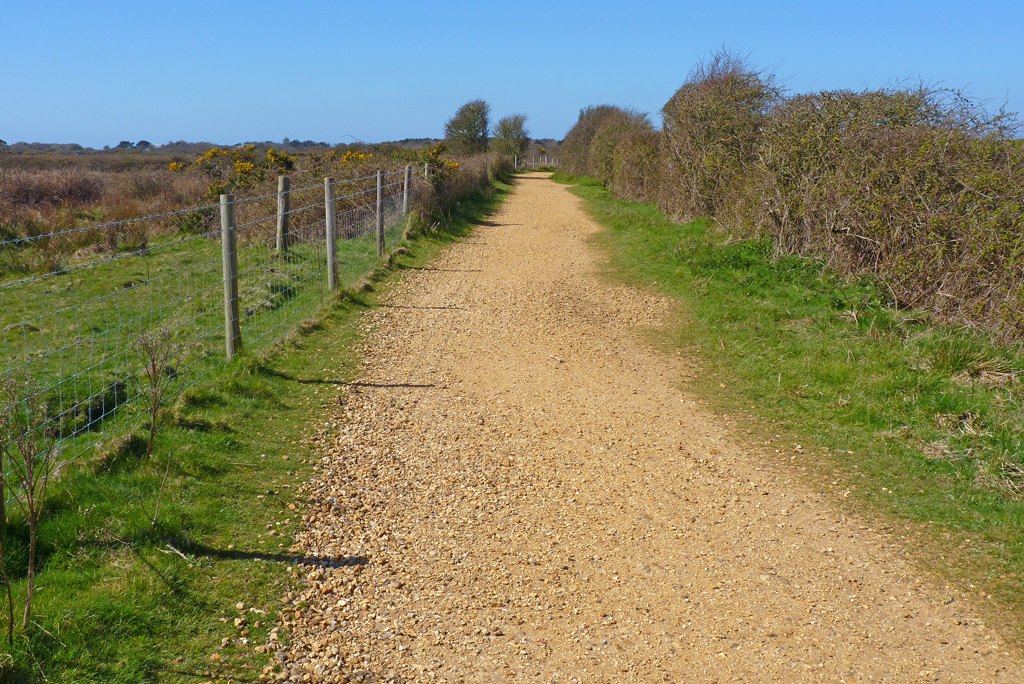

A cycling route can be continuously marked on a map while containing very different surfaces. Asphalt, firm fine gravel, loose coarse stones and a softened woodland track do not demand the same riding technique. Taking only the distance may overlook the section that determines the pace or suitability of the whole circuit. Check surfaces before departure and retain room to adapt on the ground.
Read the map description precisely
A cycle path initially describes intended use or alignment, not necessarily its surface. Conversely, asphalt says nothing by itself about traffic volume or access permission. Planning software may show path types and surfaces separately. Read both and choose a profile appropriate to your bicycle.
A short unknown section deserves attention even if most of the route is paved. Two kilometres of loose ground can be decisive for narrow tyres, heavy luggage or less confident riders. Seek current local information rather than inferring conditions from a distant landscape photograph.
Dry and wet are different situations
Fine gravel may roll comfortably when dry and soften after rain. Leaves can conceal roots, unevenness or slippery patches. A previous ride is therefore a useful reference, not a guarantee of today's condition. Pay particular attention to woodland and unsurfaced connections after changing weather.
If a surface becomes unexpectedly difficult, slow early and avoid abrupt steering. Pushing may be appropriate at a suitable place, provided the route is permitted in the first place. Walking beside a bicycle does not turn a closed path into an authorised connection. A diversion must therefore fit both technical needs and access conditions.
Prepare a genuine alternative
Mark the start of the uncertain section and a possible bypass beforehand. The decision can then be made before you are halfway through. Include its extra distance and any road sections. The shorter option is not always more pleasant, and the surfaced option is not automatically quieter in traffic terms.
For a mixed group, assess suitability for the least confident person. An experienced rider should not call a surface easy simply because they can negotiate it. Afterwards, record the specific section and conditions. “Woodland track soft after rain” is more useful than declaring the whole route either poor or effortless. It preserves the distinction between a temporary condition, a permanent surface type and a difficulty caused by the particular bicycle or load used that day.