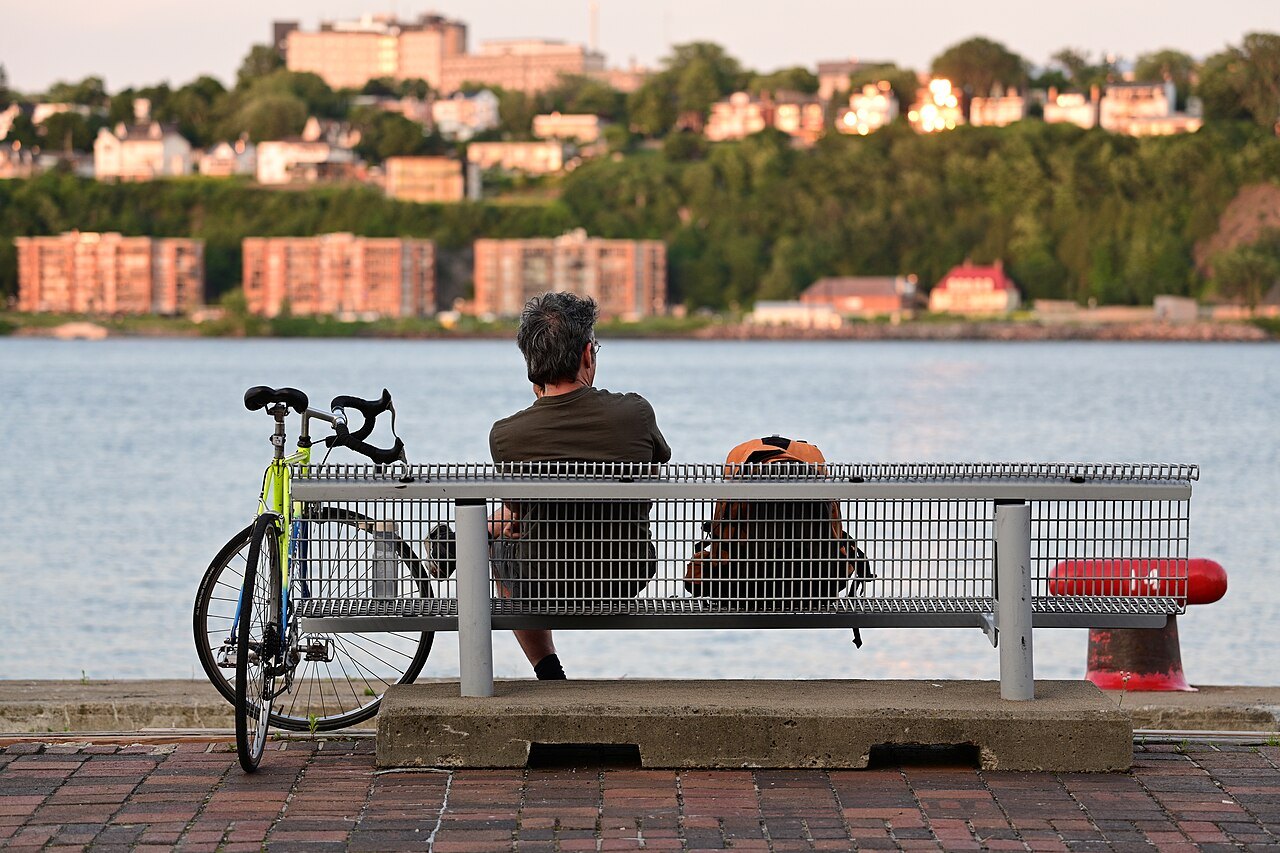
A bench with a view is not automatically the best stopping place on a cycle ride. What matters is whether the group can stop safely, park bicycles and set off again. Attractive Lower Rhine views may sit directly beside narrow paths. Select a stop by access and space rather than only its photograph or a map symbol.
Put the break before it becomes urgent
A drink or food stop should be reachable before energy and attention fall substantially. If the only planned stop lies near the finish, it does little for the longer middle section. Divide the circuit into sections and identify at least one suitable place in the first half.
A café can make an enjoyable focus, but needs a current opening check. Carry water and a snack independently. A closed door then means choosing another stop rather than continuing without supplies.
Leave the traffic line before stopping
Signal a stop in good time and choose somewhere outside the riding line. Behind a bend or immediately before a narrow bridge is unsuitable even for a quick map check. Park bicycles without blocking paths, ramps or entrances. A long trailer requires more space than a single bicycle.
Assess the restart too. Must everyone immediately cross an unclear road, or is there room to mount calmly? A place may be good for sitting but awkward for a large group to leave. These small transitions affect comfort more than the number of benches available.
Combine shelter with observation
Shade helps in sunshine and a sheltered permitted position helps in a cold wind. Neither turns a private farm entrance into a public rest area. In reserves, stay within accessible areas and remove all packaging. Do not feed animals even if they approach the stopping place.
A brief stop can also provide an orientation check. Compare remaining distance, time and weather. If the group needs a longer break, remove an optional section afterwards. Avoid trying to cancel out the rest by increasing speed. A pause fulfils its purpose when the next section can be ridden attentively and without haste. Record successful places afterwards with their actual access, rather than saving only a vague point beside the river. On a later outing, this makes it easier to distinguish a proven group stop from a viewpoint that merely looked inviting from a distance.