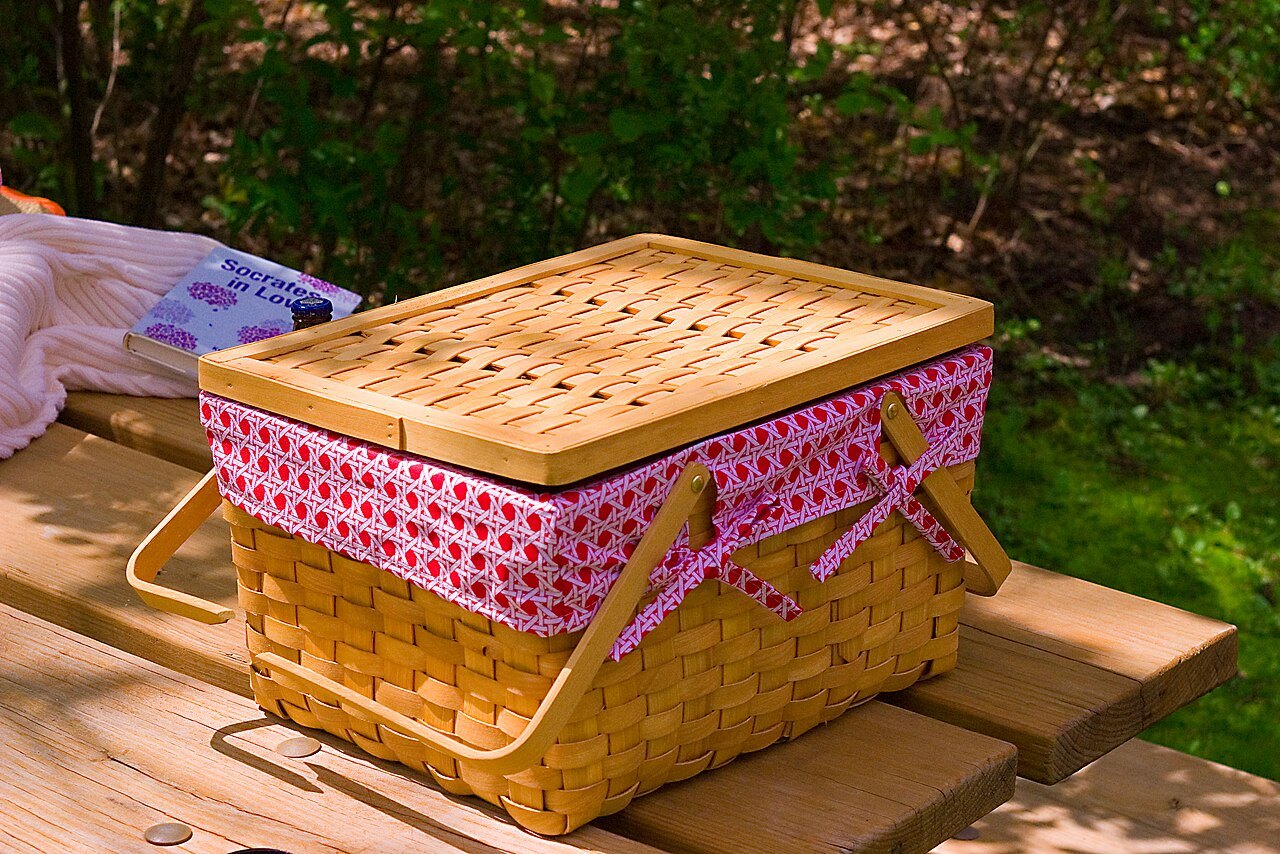

A suitable picnic place is not simply the first empty lawn with an attractive view. Check whether eating is permitted, whether the ground suits you and whether access avoids beds or private land. The choice should also fit the rest of the outing: a long meal at the farthest point can make returning harder than a pause nearer the start.
Permission belongs to a specific place
Xanten Archaeological Park explicitly allows picnics on its lawns in its visitor questions. It also distinguishes these areas from exhibition interiors, where eating and drinking are not permitted. This illustrates why a specific rule helps. It says nothing about permission in other castle gardens, nature reserves or farmland.
Read the guidance at your chosen place and notice temporary uses. An apparently empty area may be needed for maintenance or an event. If uncertain, ask the operator or choose a clearly designated resting area. Barbecues and open fires are also a separate matter from bringing a cold meal.
Pack so that nothing blows away
Choose containers that can be closed again and bring your own waste bag. Do not leave lightweight packaging loose beside a blanket. A small mat is often enough for a brief stop. Before spreading it out, check for damp ground and make sure no route is blocked.
Arrange food so that people do not repeatedly climb over bags. Keep the edge of a path clear and place nothing on artworks, monuments or delicate planting. If children finish first, agree a visible area where they can remain. A meal break should not cause the group to disperse unnoticed.
Leave after one final look
After packing, inspect the area again from another direction. Small lids, film and food scraps are easily missed in grass. Take waste with you when bins are absent or full. Even biodegradable leftovers do not automatically belong in the surroundings. Do not leave food for animals. A clean space is a straightforward condition for allowing the next visitors to use the same place comfortably.