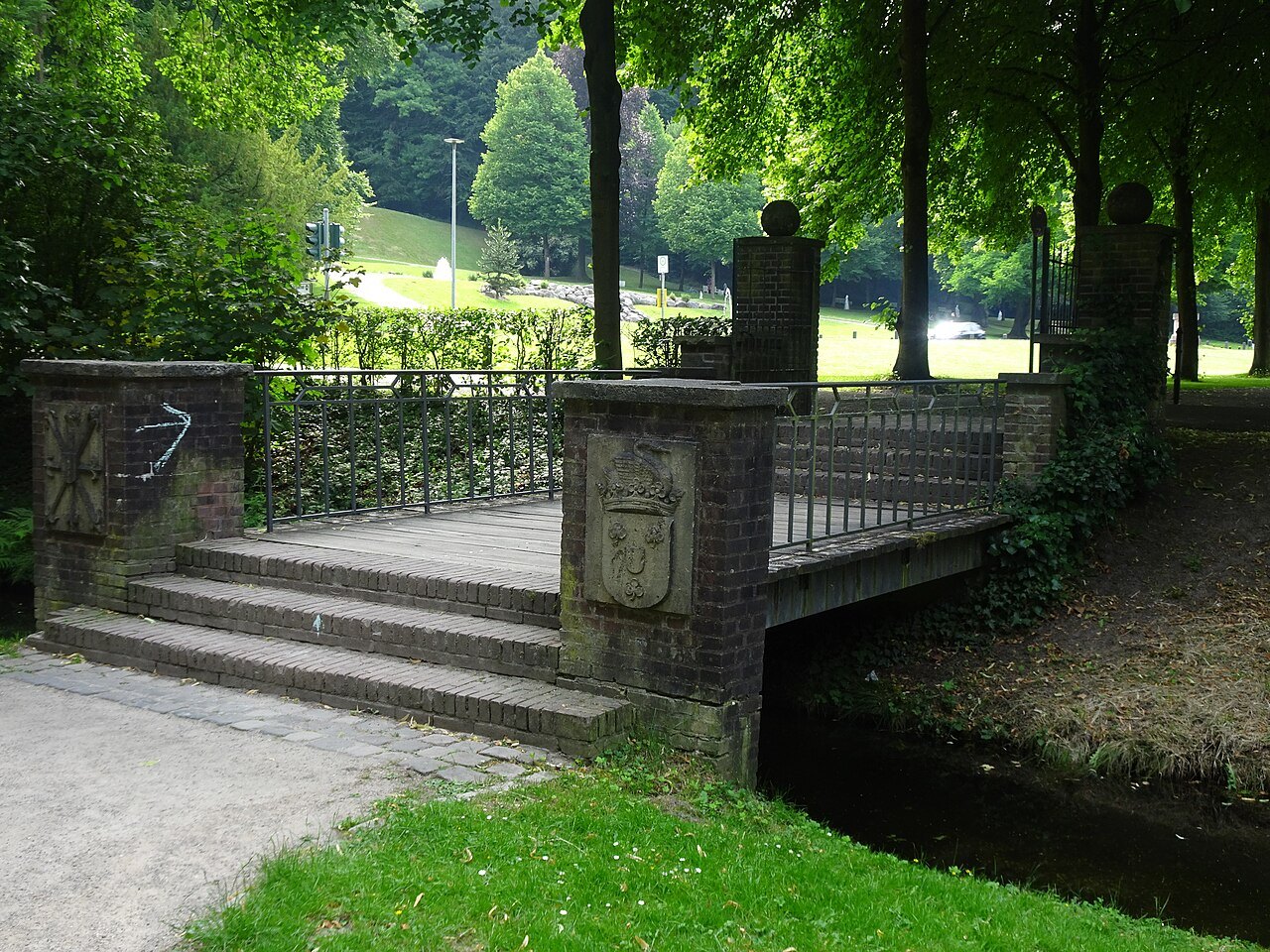

A garden visit with children does not immediately require a trail with numerous stations. One task that develops as you walk is often enough. Kleve's gardens offer paths, water, terraces and trees as different starting points. The activity should draw attention to these surroundings rather than encourage children to complete a prepared checklist as quickly as possible.
Begin with a shape
Ask the children to find something round. It might be a tree crown, movement on water or a detail in the design. There is no prescribed answer. Let the child point out the choice and explain what makes the shape recognisable. You can then move on to straight lines or something reflected in water.
Another possibility is comparing two positions. What can you see here that was hidden at the previous spot? The terraces and sightlines of a designed garden lend themselves to this. Choose accessible paths that suit the group, however. A task does not become better simply because it requires climbing steps.
Search without collecting
Agree beforehand that discoveries will initially be observed rather than collected. Plants, flowers and stones need not be taken away to preserve the experience. A sketch, photograph or brief description is enough. Near water, remain on designated paths; an interesting reflection is no reason to lean over an edge.
Avoid setting a task whose answer appears reachable only inside a flower bed or on a sculpture. Ask instead what can be recognised from the current position. The limits of the permitted area then remain part of the game. An unfamiliar plant can stay unfamiliar. You can identify it later through a label or suitable reference.
Stop while interest remains
After two or three discoveries, let the task end. Ask which detail they liked most, then allow ordinary walking or a break. Several children need not find the same thing: a shared question can accommodate different answers. If attention shifts to something else, such as a bird or sound, follow that interest where the setting allows. The garden is an opportunity for observation, not the backdrop to a test.