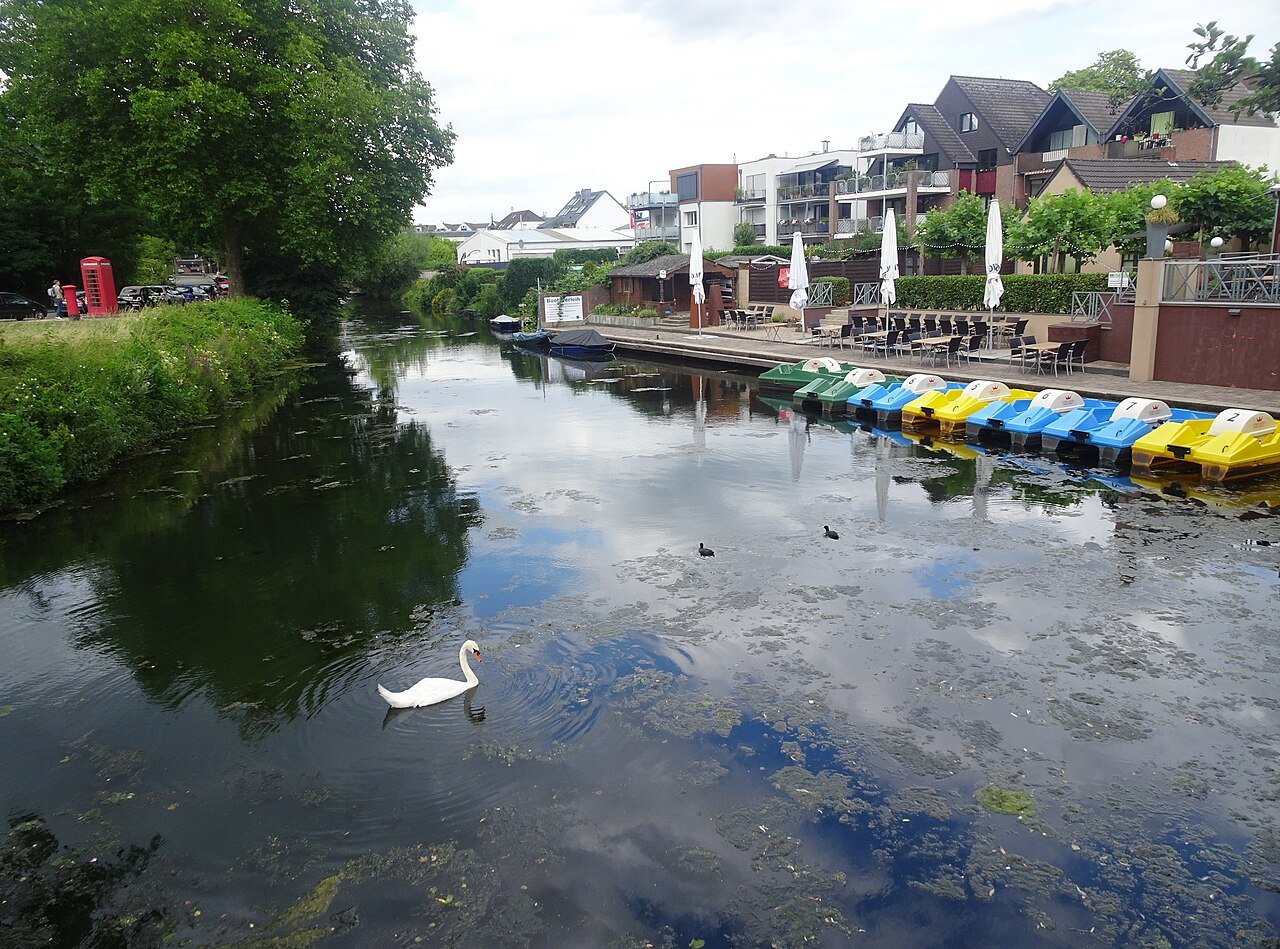

A photo walk becomes more interesting when each image does not repeat the same overall view. Choose a manageable area you can explore safely on foot and work with different visual questions. A park, bridge or square is enough. A phone can serve as the camera; what matters is what you include in the frame and what remains outside.
Five questions for one place
Begin with an overview. Show the place so that someone can understand its main spatial relationships: path and building, bridge and water, or trees and open ground. For the second image, find a line that leads the eye. It may be straight, curved or broken. Compare how its position within the frame changes the effect.
The third task concerns a surface. Choose stone, bark or another visible material without touching anything or entering private areas. For the fourth, look for repetition: windows, posts or shadows. The fifth image connects near and far. A foreground element can explain scale but should not accidentally obscure the main subject.
Not every location immediately provides all five subjects. Leave a task unresolved if it does not fit. The aim is to make different decisions, not complete a series at any cost. Stop for each photograph and check your surroundings before looking through the screen.
Compare after taking the pictures
Review the images together only once you reach a suitable quiet place. Which explains the location best, and which reveals something easily overlooked during ordinary walking? A technically sharp image may still feel unclear when too many elements compete for attention. Conversely, a simple composition can communicate a definite idea.
With children, do not select only the supposedly prettiest pictures. Ask what they intended to show and whether the image conveys it. Connecting intention and result teaches more than a competition. Respect local photography rules and other people's privacy too. Nobody needs to become the main subject of a task without being asked.
Keep the location with the series. A general bridge picture should not later be presented as a different place. A brief note of date, position and task preserves the context and makes a deliberate comparison possible on your next photo walk.