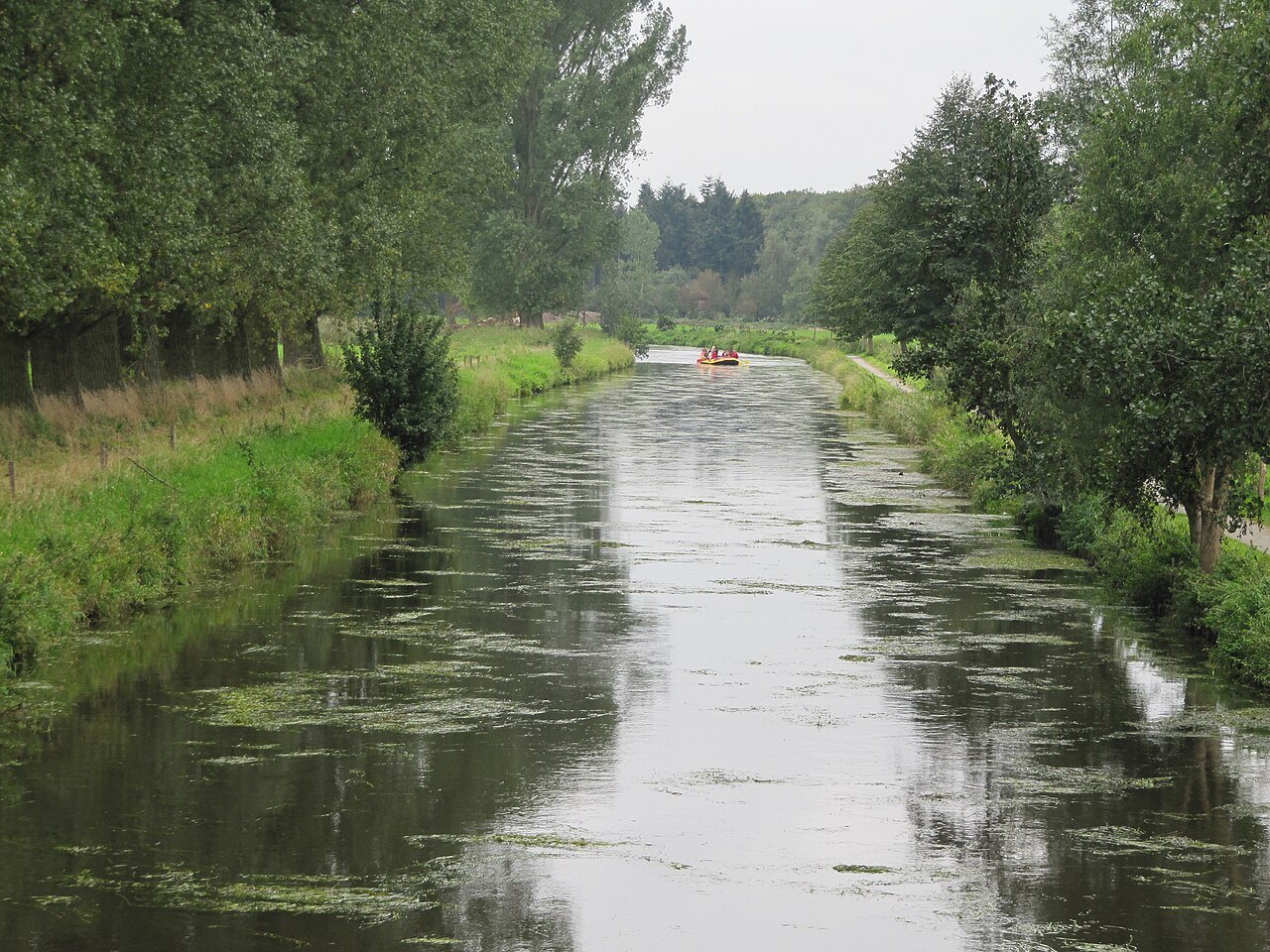

A walk beside the Niers near Wachtendonk need not become a long hike. The historic centre and river landscape already offer contrasting impressions within a compact area. The municipality publishes a cultural-landscape discovery trail. Use its current information as a starting point and choose a section that fits the time available, rather than inventing a waterside circuit from a map view alone.
A crossing needs its own place in the plan
Two paths on opposite banks may look very close on a map. Without a suitable crossing, they can still be far apart in walking terms. Establish first where you can change sides safely and how the return works. A visible boat landing does not fulfil that function.
The municipality also describes a self-operated ferry across the Niers. Anyone including it in a longer circuit should check present availability and prepare an alternative. A ferry is not a continuously guaranteed bridge. For a short walk, a route without ferry dependence may be simpler, especially when the return must connect with a fixed bus departure.
Examine the river and village edge together
The interesting transition runs between buildings, green space and the open lowland. Notice how each changes the view of the water: houses constrain one angle, trees frame another, and a bridge opens a perspective along the channel. These differences remain visible in overcast weather.
A small photography exercise can use three views from the same walk: an architectural detail at the village edge, a section with an identifiable riverbank, and a wider landscape. Stop for each photograph and find a position outside the flow of pedestrians. Together, the pictures explain more about the place than three almost identical water views.
Adapt the walk to the group
For children, interpretation panels can begin short conversations without needing to be read consecutively in full. Choose one subject, such as trees beside water or the use of meadows. A clear focus keeps the outing manageable and prevents every pause from becoming a lengthy reading exercise.
Sturdy footwear is useful after rain; a pleasant-looking route in a leaflet can be damp under different conditions. For particular mobility needs, check the specific surface and crossing rather than relying only on a general description of the discovery trail. End the riverside section in good time if you also want to explore the centre. Nature observation and the village visit can then complement each other, without either becoming merely a hurried return journey. Mark the chosen turning point before leaving so that a tempting additional bend does not quietly double the planned distance.