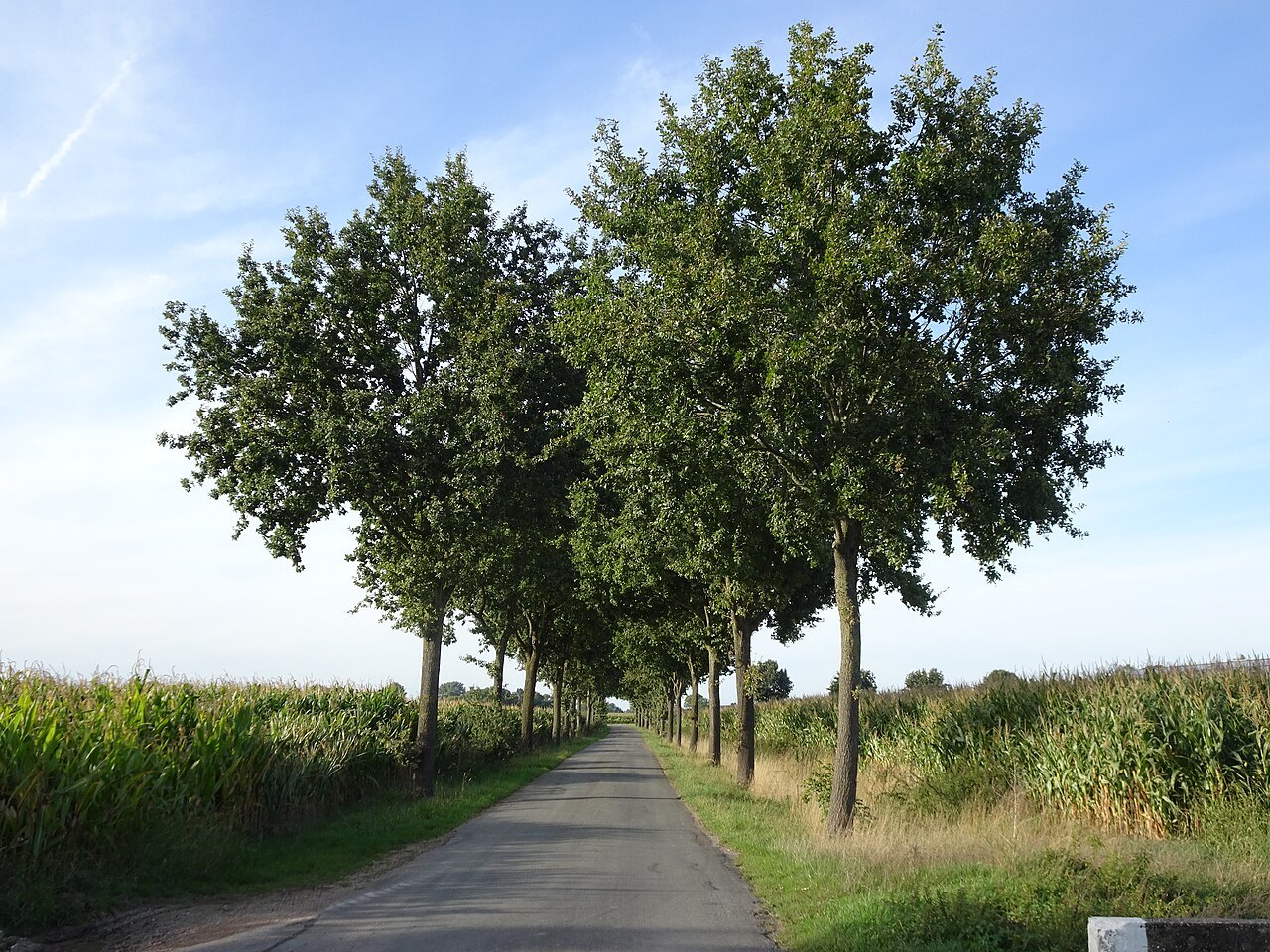

The Düffel does not reveal itself from a single viewpoint. Its interest lies in small changes within a wide, open landscape: a hedge dividing two meadows, a damp hollow, a row of trees behind a ditch. Waiting exclusively for a spectacular wildlife sighting can obscure these relationships. A slow walk with several observation stops therefore makes more sense than a long route squeezed into a tight schedule.
A landscape that is worked
The NABU nature station describes the Düffel as a former floodplain protected by dykes, with grassland, hedges and small bodies of water. Conservation and farming exist alongside each other. A maintained fence or mown strip consequently tells you neither that access is allowed nor that the ground is unimportant for wildlife.
Try identifying three different structures from the public path. Where does short grass end? Where does taller vegetation begin? Where does water create a boundary? This simple exercise requires no knowledge of species. Record the visible differences before searching for explanations. A dark patch may be damp ground or simply shadow; binoculars can help distinguish them.
The season changes the view
Large gatherings of geese are conspicuous in winter, while spring breeding activity makes quiet especially valuable in the meadows. Particular birds cannot be scheduled reliably. Plan an outing that remains interesting without a rare sighting: landforms, pollarded trees and the relationship between paths and watercourses provide observation subjects of their own.
For a small circuit, choose two public paths on a current map and confirm that a permitted connection joins them. At the first stop, examine nearby vegetation; at the second, study the horizon. If a safe connection is missing, retrace your steps. A field edge is not automatically a shortcut, and a farm entrance is not visitor parking.
Distance is part of observation
Stop before animals have to respond to your approach. Repeatedly making birds take flight does not improve an encounter. For photography, a wide landscape composition often communicates more than a heavily enlarged, blurred bird. Keep dogs under control and follow the instructions displayed locally.
Under an open sky, sheltered stopping places may disappear just when the wind rises. Carry another layer and water; in poor weather, an easy return matters more than completing an ambitious circuit. Back home, compare two or three sketches with the map. Apparently random lines may turn out to be ditches, tracks or traces of earlier watercourses. This also gives a return visit a purpose: look at the same visible features in another season rather than collecting more distance.