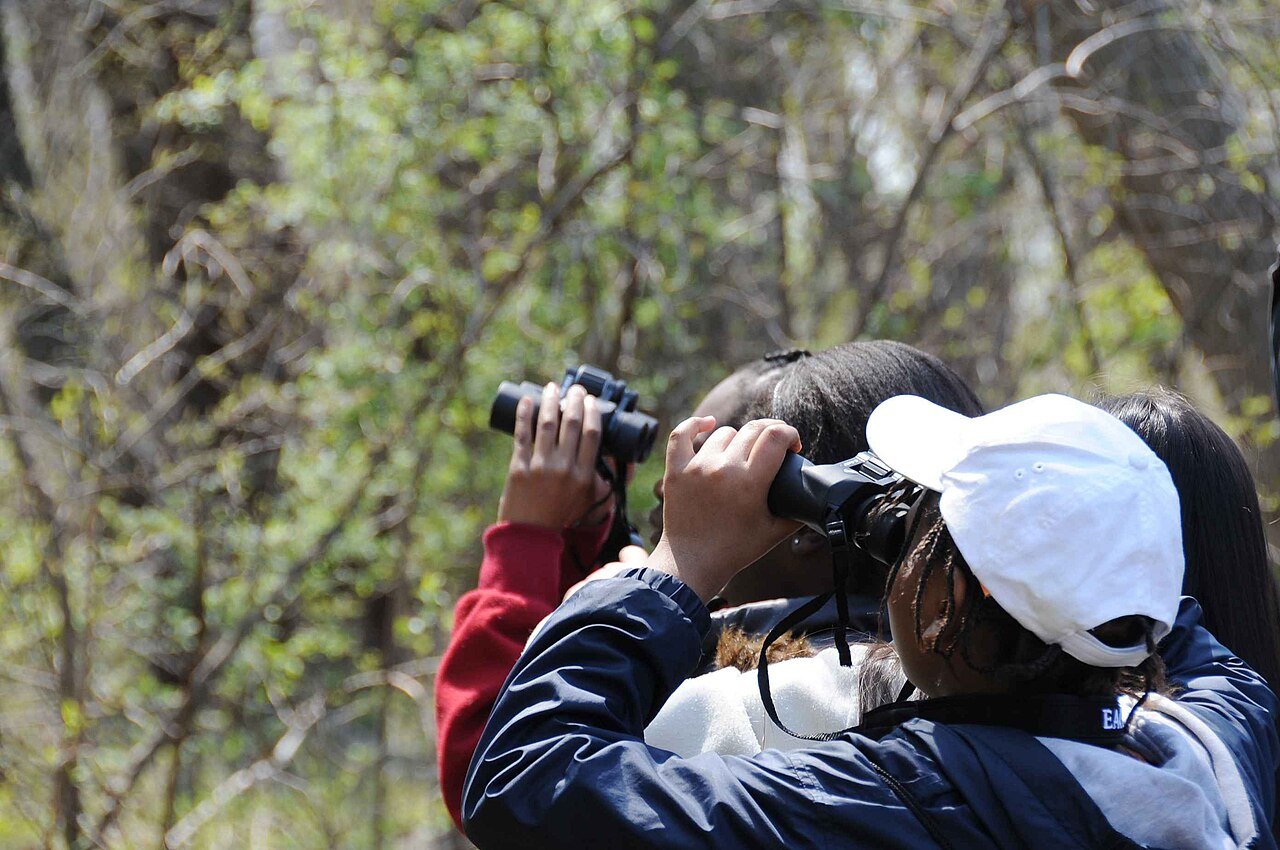
Correct species identification need not be the aim of a first birdwatching outing with children. How a bird walks, swims or changes position may be more interesting. The Lower Rhine's varied habitats offer opportunities, but animals cannot be ordered into view or moved into a convenient position. Choose a permitted observation place and accept that there may be little to see that day.
Look with the unaided eye first
Let the group look quietly first. Where is movement visible: on the ground, on water or on a branch? Binoculars help once there is a rough idea of where to point them. Give a simple reference, such as to the right of the distinctive tree, rather than calling out only there.
If using binoculars, begin with a stationary object nearby. Children can practise locating it and focusing before trying a bird that may move away. Share viewing time without pressure. Someone who cannot see through the binoculars can describe what is visible without them.
Ask one short question about behaviour
Watch whether the bird remains alone or in a group, how often it raises its head and how it moves. Afterwards, describe only what you saw. A bird lowering its head does not automatically reveal what food it finds. You may note a guess, but leave it identified as a guess.
Keep your distance and stay on designated paths. Do not pursue a bird that flies away, play calls or use food to make viewing easier. NABU Naturschutzstation Niederrhein manages protected sites and offers guided nature activities. These can support beginners without families searching for their own viewing positions in sensitive areas.
Finish without needing a rare sighting
After a brief quiet period, the observation can end. Sketch a movement or note three features you remember. A suitable identification reference can help later. There is no need to force an uncertain species name. If no bird was clearly visible, sounds and habitat remain valid observations. The aim is to practise attention and consideration rather than fill a list with impressive species.