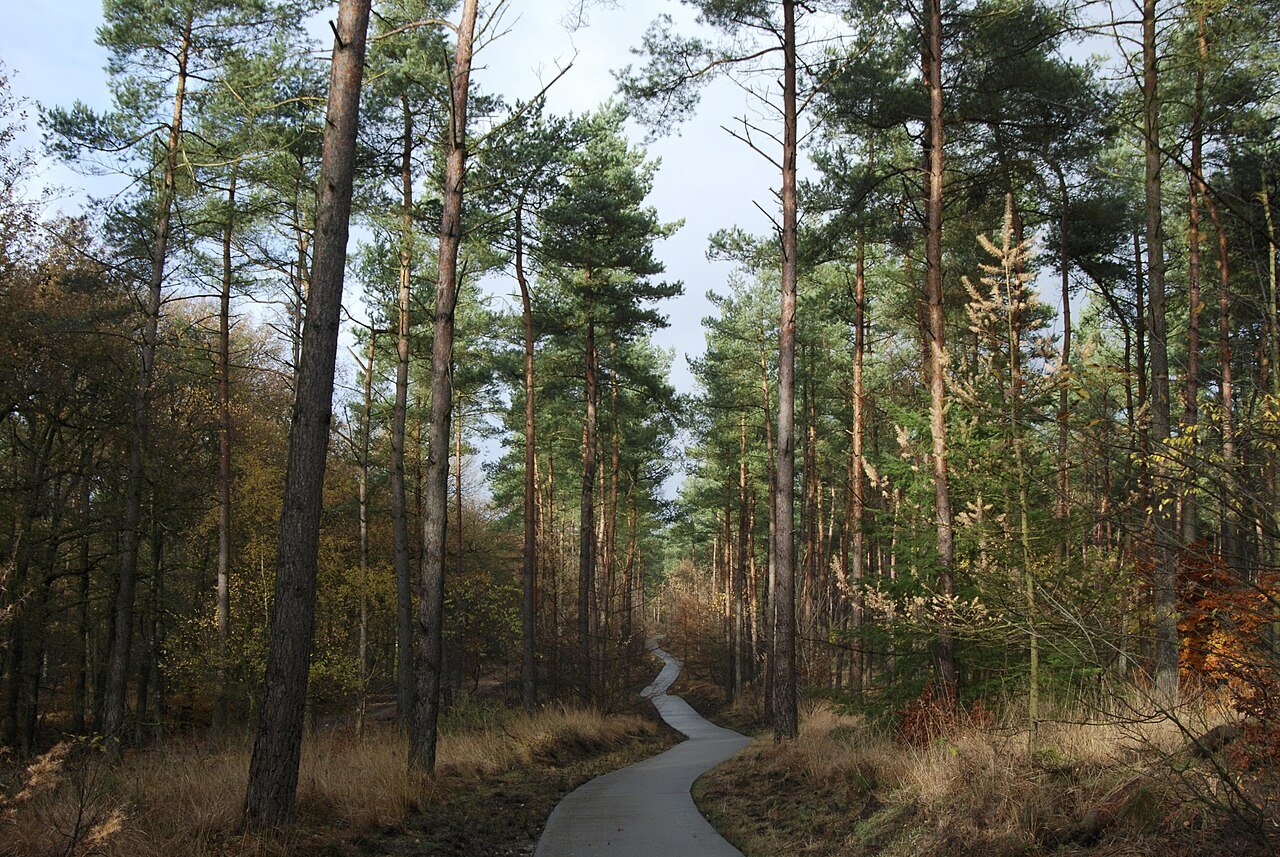
An autumn path may initially look soft and even because leaves cover its surface. Edges, roots or wet patches can lie underneath. Plan the walk around the actual ground rather than its appealing colour alone. A short familiar route leaves time for looking and makes it easier to return early if conditions are unsuitable.
Check beforehand and reassess on the way
Before setting out, check local weather and possible closures. State guidance explicitly notes that woodland hazards may remain after a storm. The wind easing does not mean every path is suitable again. If current information is unavailable and damage is visible, choose another destination.
Conditions can change within a short distance. A surfaced beginning may give way to soft ground. Do not bypass large wet patches through sensitive vegetation. Turning back is often preferable to creating a broad new track beside the path. Suitable footwear and clothing help with expected conditions but cannot make an inappropriate route suitable.
Observe leaves without needing a collection
From the path, look for three different colours or shapes. Describe them more precisely than simply red and yellow: is the edge darker, the centre lighter, the surface dull or glossy? One leaf can show several changes at once. A sketch or photograph records the observation without taking plants or ground material away.
Try comparing the same tree from two distances. Close up, individual leaves dominate; farther away, they form an area of colour. Avoid stepping backwards into unclear ground while taking photographs. Stop at an appropriate position first, then compose the picture.
Do not leave the return until twilight
Allow enough time for a slower return and brief pauses. Wet clothing or tired children can stretch an originally small outing. Once the most interesting observation has been made, the walk may end. At home, compare pictures and note the colour or shape that stood out. The autumn day remains a specific discovery without using every last available minute on the route.