
Xanten offers two very different approaches to the past. In the old town, the market, cathedral surroundings and historic everyday structures provide the setting. At the LVR Archaeological Park and Roman Museum, the focus is the Roman city of Colonia Ulpia Traiana and its archaeological traces. Visiting both in one day is possible, but a complete exploration of both should not be the starting assumption. Decide before travelling which will take priority.
A town visit centred on a small object
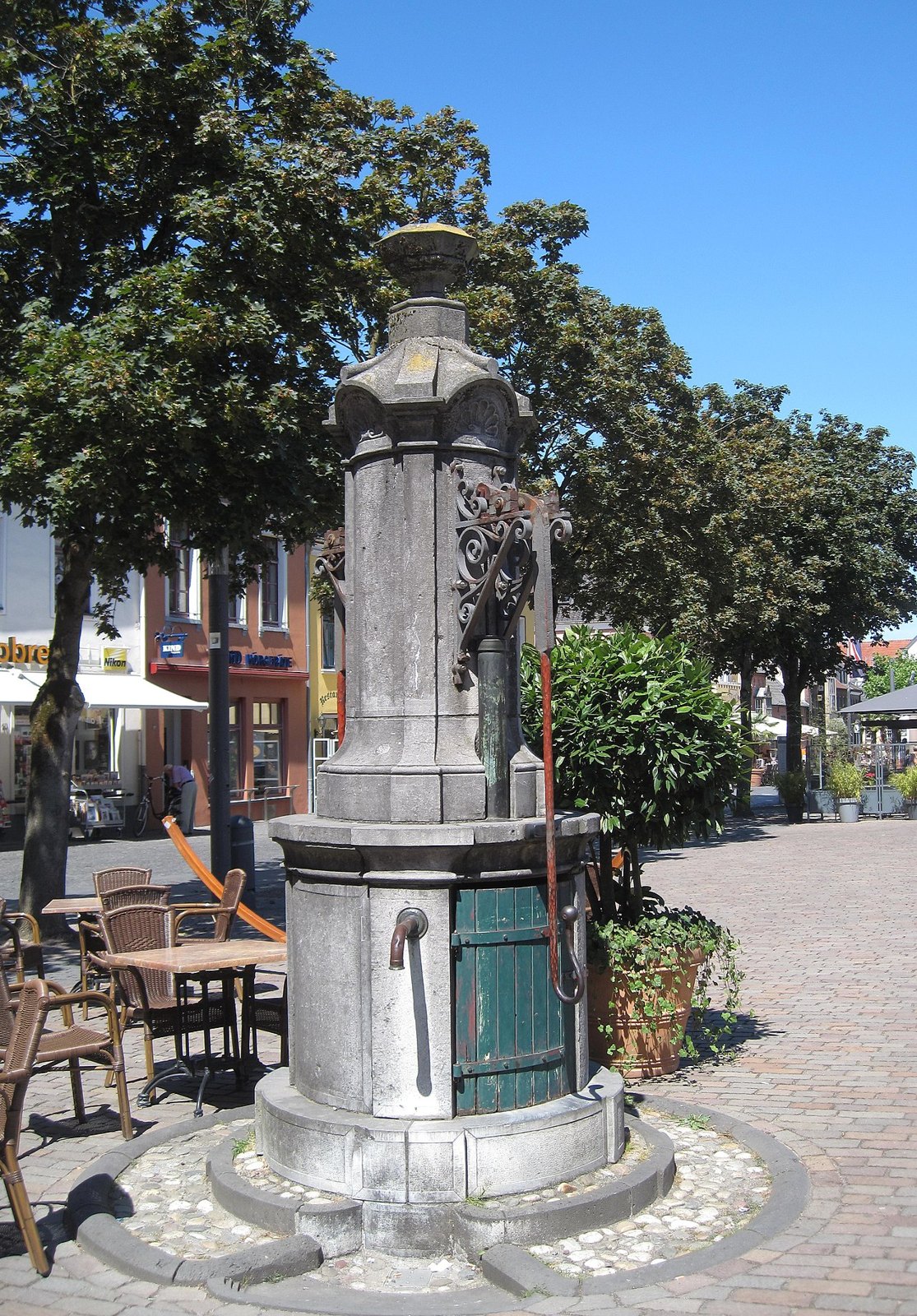
The market and cathedral area can frame an old-town visit. Within that setting, the market pump offers a manageable individual subject. It raises a question about how people obtained water before a supply inside every home became ordinary. Examine its position, shape and relationship with surrounding houses. An everyday object can make urban history more tangible than a sequence of major dates.
The pump appears in the municipal monument documentation. That does not establish that it can be used as a drinking-water source. Carry water and follow any signs at the site. With children, imagine its former task: how many journeys would be necessary if every container had to be carried home separately? There is no need to operate a historic structure to explore that question.
At the cathedral, both scale and function change. Look first at the building and its entrances before beginning an interior visit. Services and religious use determine when sightseeing is appropriate. If the interior is your main interest, check its arrangements directly; a general town map cannot answer that question.
The Roman park is more than one building
The Archaeological Park contains different stations and extensive outdoor areas. The LVR explicitly explains that even a guided circuit covers only part of it. Avoid scheduling a tight departure immediately after a tour. Allow for walking between places, breaks and the possibility of spending longer at something that interests you.
Choose a theme such as bathing, housing or public buildings. For bathing, consider how water was delivered, heated and drained. At the Great Baths, walkways pass above original remains, while the protective building communicates their former dimensions. This lets you connect archaeological evidence with an understanding of the space.
Keep distinguishing between surviving remains, protective architecture and reconstruction. A fully standing structure in the park need not have remained unchanged since Roman times. Read the explanation at the individual site before attaching a historical claim to a photograph. The distinction does not diminish the experience; it explains how knowledge is developed from incomplete evidence.
Making the museum central or additional
The Roman Museum offers opportunities to investigate objects and their context. Select a few finds and ask specific questions: who used them, what material are they made from, and what might traces of wear reveal? One attentive examination is often easier to remember than a rapid circuit of many display cases.
In rain, the museum can take a larger role. That does not make the entire outing independent of the weather: arrival, entrances and connecting walks still matter. Consult the current site plan and choose the appropriate entrance. If booking a tour or workshop, record its meeting point separately; programmes do not necessarily begin in the same place.
Two realistic versions of the day
For an old-town day, begin at the market, visit the cathedral if arrangements allow, and leave room for a break. The park can remain a separate future destination or a deliberately limited addition. For a Roman-focused day, start at the intended park entrance and allocate most of your available time there. A short old-town walk can finish the visit if everyone still wants it.
Above all, avoid making a final transfer simply because another place remains on the list. Shade and drinking breaks matter on a hot day. With children or limited mobility, path lengths and places to sit should influence the selection. A successful plan is one that makes the chosen history understandable and leaves an unhurried journey home.