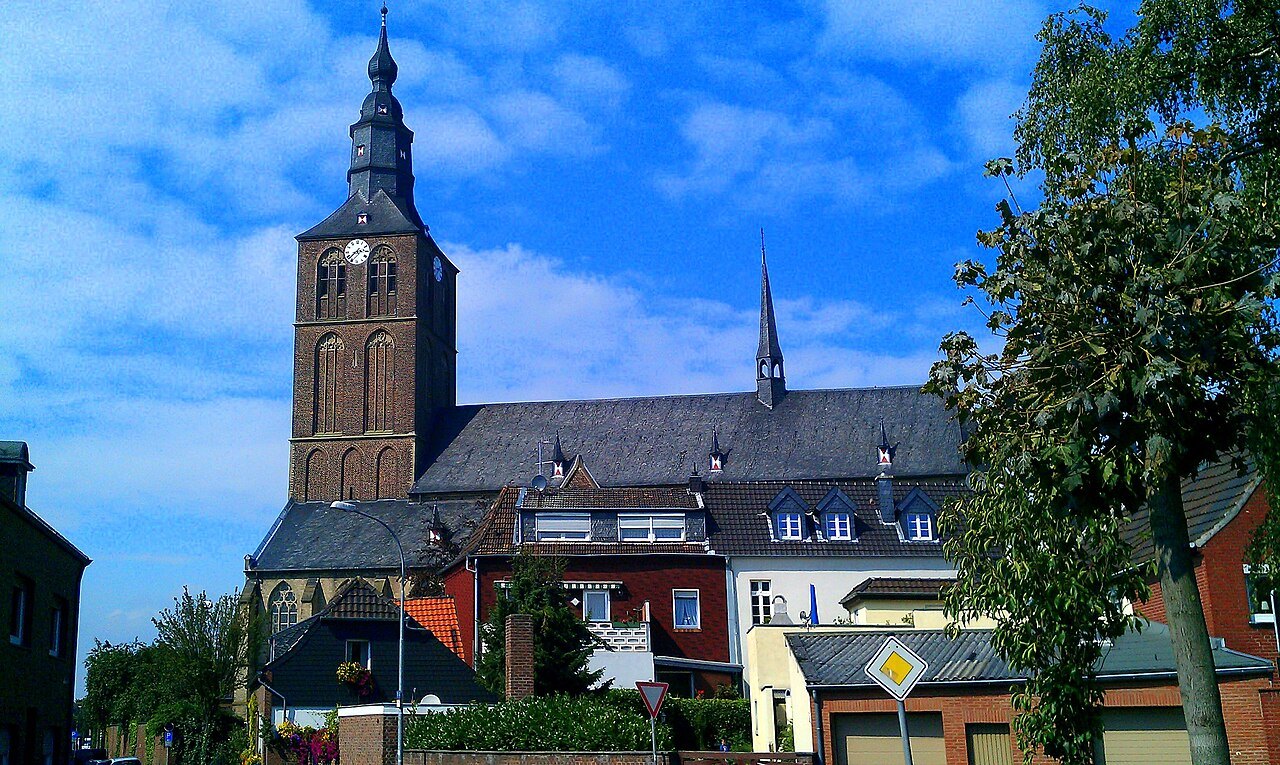

Kerken cannot be reduced to a single village centre. Aldekerk and Nieukerk provide two distinct focal points that lend themselves to a deliberate comparison. Allow more than a photograph beside each church. The relationship between church, square, streets and everyday use is more interesting. Both settlements have railway stations; check the actual connection in the current timetable.
Beginning with the same questions
Choose a comparable starting point in each centre. Ask where space opens out and where buildings closely frame the street. Then consider materials: brick, render, paving and roof surfaces create different impressions. Avoid immediately deciding which place is prettier. Differences become more precise when you describe them first.
The municipal development study examines both centres and emphasises their evolved structures. In Nieukerk, the area around St Dionysius and Dionysiusplatz provides a central reference. Religious and municipal functions meet here. The square is consequently more than a backdrop for a church tower.
Looking closely at Nieukerk
Find a position from which you can see the church and adjoining streets together. Then move into a side street and notice how long the tower remains a landmark. These sightlines help explain a settlement without requiring an exact reconstruction of its historical plan.
The municipal documentation describes Michael-Buyx-Haus as a restored building with civic uses. A historic house can therefore continue to accommodate meetings, weddings or events. Do not assume it is permanently open like a museum. Its exterior can still form part of the walk independently of interior access.
Aldekerk as a second comparison
In Aldekerk, repeat the exercise using deliberately similar questions. How does the route from the station lead into the centre? Where do shops stand in relation to quieter residential streets? Which buildings share features, and which introduce a different emphasis? The comparison does not need an identical number of stops.
If walking between the settlements, treat that connection as a separate part of the plan. The railway may reduce the walking required, but depends on actual departures. An unhurried visit can also concentrate on one centre, leaving the second for another day with the same notes. The value lies in sharpening your observation rather than rapidly completing both names.