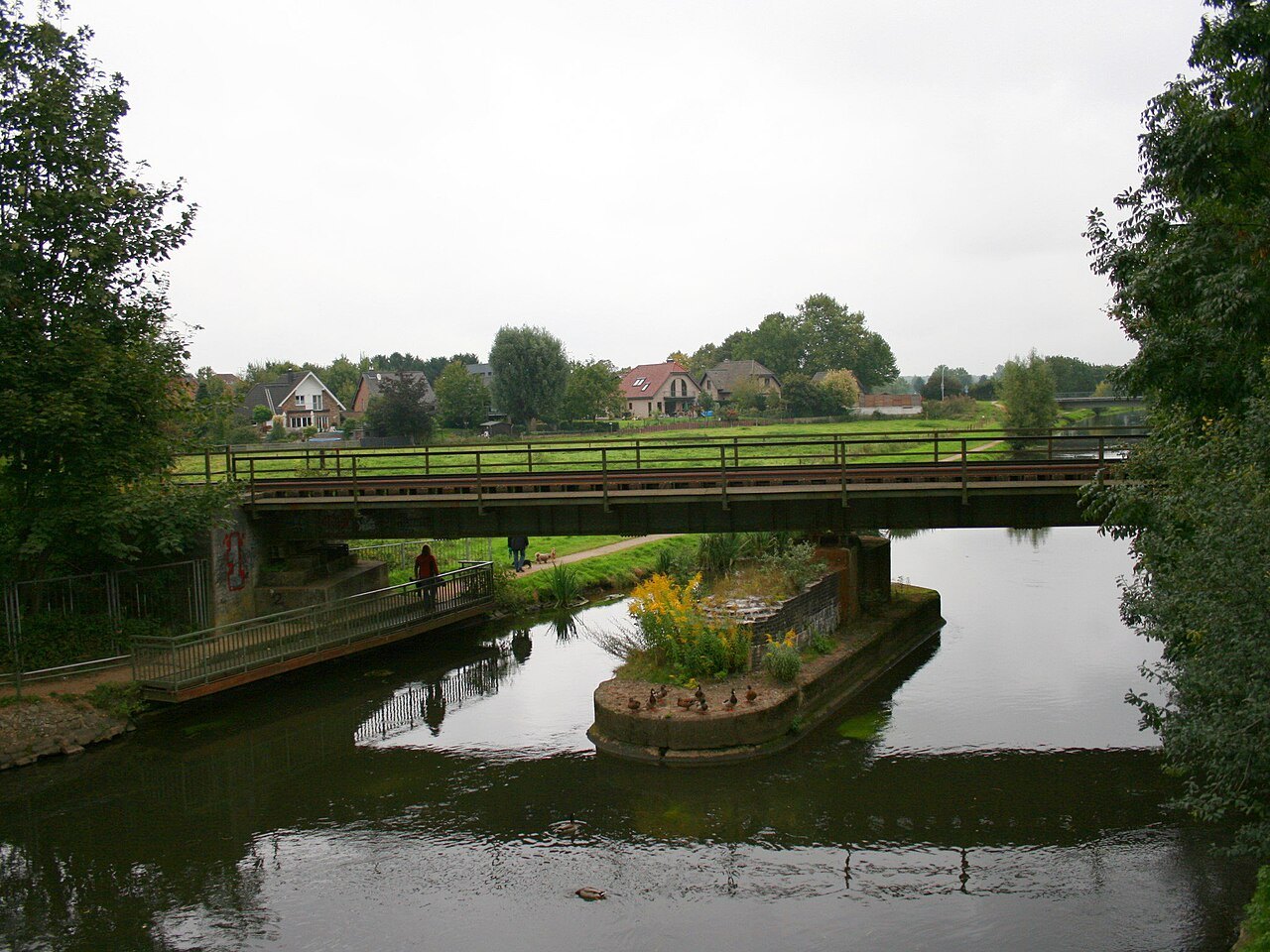

Goch can be explored as a town with a river rather than treating urban sightseeing and a nature walk as entirely separate activities. A manageable section beside the Niers adds water, banks and open views to the historic buildings. The important distinction is between a town circuit and a longer walk towards Weeze. Both are possible, but they require different planning.
Choosing a historical anchor
The official town walk includes the Steintor, dating from the fourteenth century. Use it as one clear historical reference point. Examine the passage and the building's presence within the present street. A town gate once marked a boundary; its surroundings may now obscure that function or use the space quite differently.
The Arnold Janssen House and Museum Goch are other possible stops. Do not automatically include both interiors in a short walk. A specific interest in personal history or an exhibition provides a better reason than wanting to visit every symbol on a map. Check current opening arrangements beforehand.
Changing scale beside the Niers
Nierswelle is a named reference point by the water. The published mobil.nrw walking suggestion uses it when moving from the station towards the Niers trail. For a town visit, a short section around this transition may be enough. Choose a clearly public path and establish a turning point before a brief riverside break becomes a lengthy excursion.
Notice how the river links built-up and greener areas. From a bridge, its direction can be easier to understand than from immediately beside the bank. Stop to look without obstructing the crossing. A watercourse does not need to be broad to influence the shape of a town.
Choosing the longer connection deliberately
The Niers route between Goch and Weeze is an outing in its own right. Walking it requires a current map, suitable shoes and a return plan. The railway station at the other end can provide a connection, but does not remove the need to check the timetable for the day. A place name on a sign also tells you little about the total distance still ahead.
For a smaller visit, return instead to the centre. Change the order to suit the weather: buildings and a break followed by the water, or the exposed section first while conditions are dry. Setting a clear limit gives you time to look properly at the Niers instead of using it merely as a link between obligatory stops.